




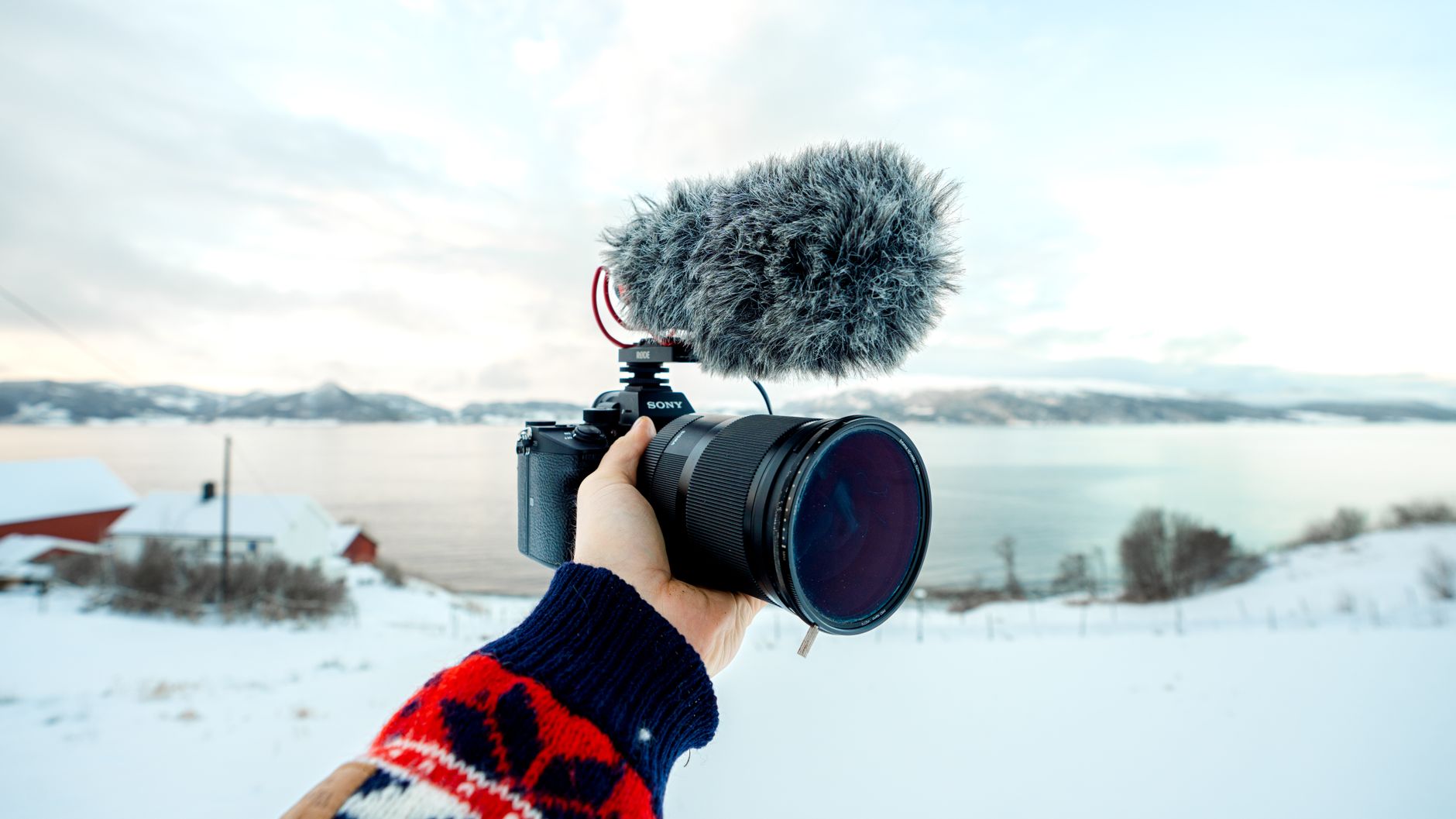
Hold a camera at arm’s length for ten minutes and you learn what spec sheets leave out. Weight becomes the main feature. A body that feels fine in a shop turns into a wrist workout when it’s also your tripod, and a bag built for a full cinema rig gets left at home on the days you most want footage.
Sony has built a lineup around that problem. The ZV-1, the ZV-E10 and their successors, along with compact full-frame bodies like the a7C, have become familiar sights in creators’ hands. Their appeal isn’t one spec. It’s a stack of small decisions that make a camera easier to carry, easier to point at yourself and harder to get wrong.
Small Bodies, Fewer Excuses
Vlogging is a strange discipline because the camera operator and the subject are the same person. Every extra ounce affects framing, because a heavy setup sags, drifts and gets set down. A compact mirrorless body can be held out in front of you for a long walking shot without the arm fatigue that turns a steady frame into a wobbly one. It also fits in a jacket pocket or a small sling bag, which changes how often it actually gets used.
That last point matters more than any sensor measurement. The best vlogging camera is the one that’s with you when something happens, and a camera that demands its own backpack stays home. Sony’s smaller bodies lower the friction of pressing record, which is why many creators treat them as an everyday carry rather than a special-occasion tool. A flip-out screen that faces forward completes the picture, letting you check your framing without guessing.
Autofocus Does the Work of a Camera Operator
Ask a solo creator what they’d miss most if it vanished, and autofocus is a likely answer. Nobody is standing behind the camera to pull focus, so the camera has to follow a face as it leans, turns and walks closer. Sony’s real-time tracking and eye detection have a reputation for staying locked on, even when the subject moves unpredictably or briefly looks away.
The behavior that makes it work is subtle. Good tracking doesn’t just find a face, it holds the choice. When your hand enters the frame holding a product, the camera has to decide whether to stay on you or switch. Sony’s creator-focused models include a product showcase mode on some bodies, which shifts focus from your face to an object as you bring it toward the lens.
It sounds like a gimmick until you’ve shot a review alone and watched your footage hunt for focus on the thing you were trying to show.
There’s a trade-off here, and it’s honest to name it. Automatic systems can make confident mistakes, and a camera that jumps to a background object at the wrong moment is more annoying than one that simply stays put. Sony gives users controls to tune how sticky tracking is, but that means a bit of setup. Creators who spend an afternoon learning those menus tend to get far more consistent footage than those who leave everything on default.
The Lens Ecosystem Is the Quiet Advantage
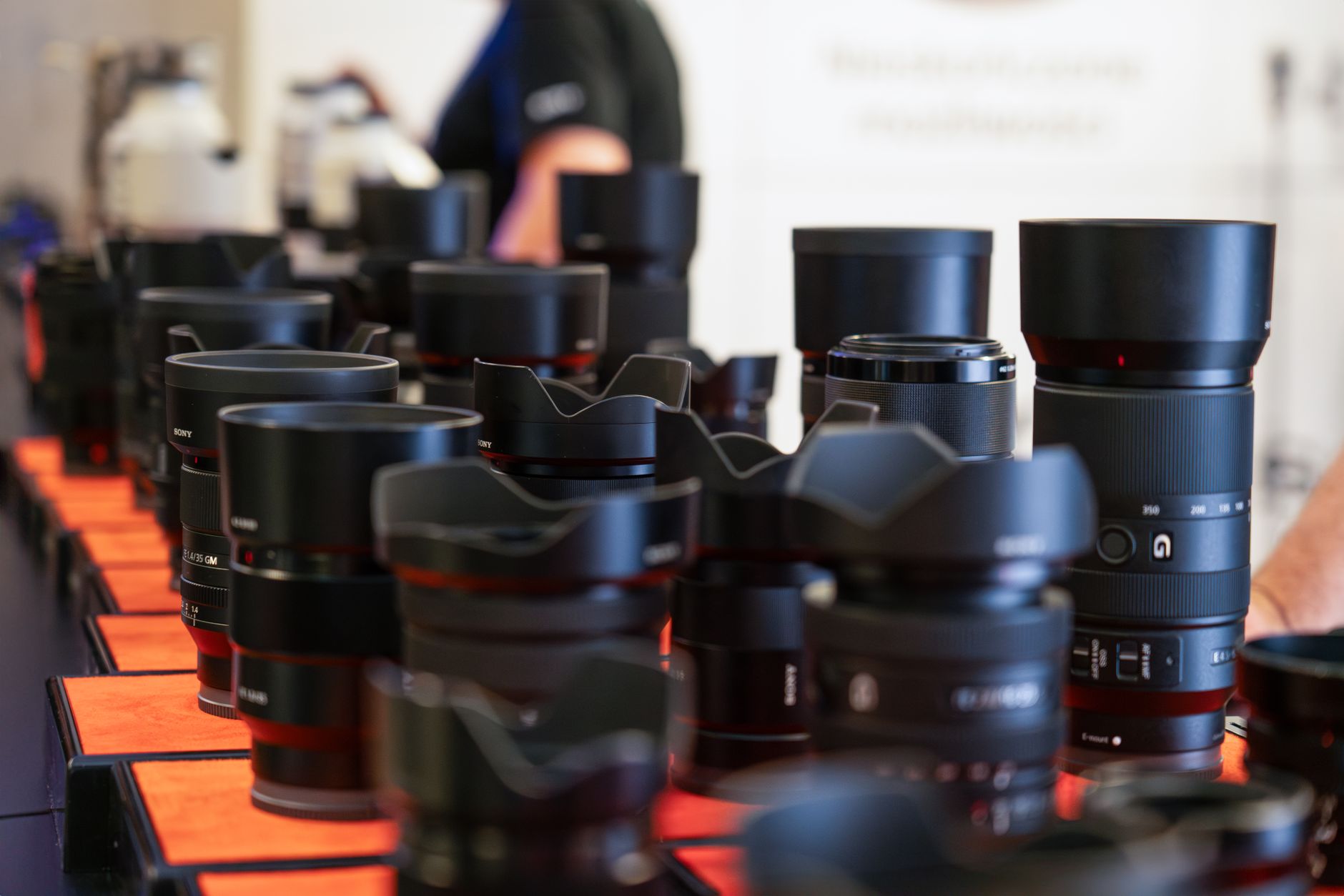
Bodies get the headlines, but lenses are where creators build long-term loyalty. Sony’s E-mount has been open to third-party manufacturers for years, so a vlogger can choose from a wide range of wide-angle primes, compact zooms and fast-aperture options at various prices. A wide lens that lets you hold the camera at arm’s length and still fit your shoulders and the scenery behind you is nearly a requirement, and the mount offers plenty of those choices.
The openness also keeps the used market healthy. Someone upgrading from an entry-level body can carry their lenses forward, and someone just starting out can buy a secondhand kit without feeling locked into a dead end. For creators whose income is unpredictable, that flexibility lowers the risk of buying in. A cheaper path in and a clear path up is an underrated selling point.
Where the Magic Wears Thin
None of this makes Sony’s compact cameras flawless. Menu systems have long drawn complaints for being dense and unintuitive, and a first-time user can burn an evening hunting for a setting that other brands put on the surface. Color science is a matter of taste, and some creators prefer the skin tones of rival systems without further adjustment. Heat management has also been a recurring topic, with some compact bodies limiting long recording sessions in warm conditions, especially at higher resolutions. Battery life on smaller bodies can be modest too, which means spare batteries or a power bank become part of the kit.
Then there’s the competition, which is not standing still. Canon and Panasonic make compact bodies aimed at the same buyers, and dedicated pocket cameras from other makers offer built-in stabilization and gimbal-like smoothness at a fraction of the size. Smartphones keep improving at stabilization, low-light processing and computational blur, and for casual creators they’re often good enough. Sony’s advantage rests on sensor size and lens choice, and those only matter to someone who actually wants shallow depth of field and the option to swap glass.
That leaves an uncomfortable question for the category. If a phone handles most daily vlogging and a pocket camera handles the rest, who is the small mirrorless buyer in two years: the ambitious creator who wants room to grow, or the one who bought a lens ecosystem and never used it?