



Dark matter has never been seen. Every claim about it rests on gravity’s footprints: galaxies that rotate too fast for their visible mass, clusters that bend light more than their stars and gas can explain, and the fine ripples in the cosmic microwave background. Physicists have buried detectors in mines and smashed particles together in colliders, and the invisible material that makes up most of the matter in the universe remains unidentified. The most productive strategy has been to map where it sits, and mapping it requires a huge, sharp, repeated look at the sky.
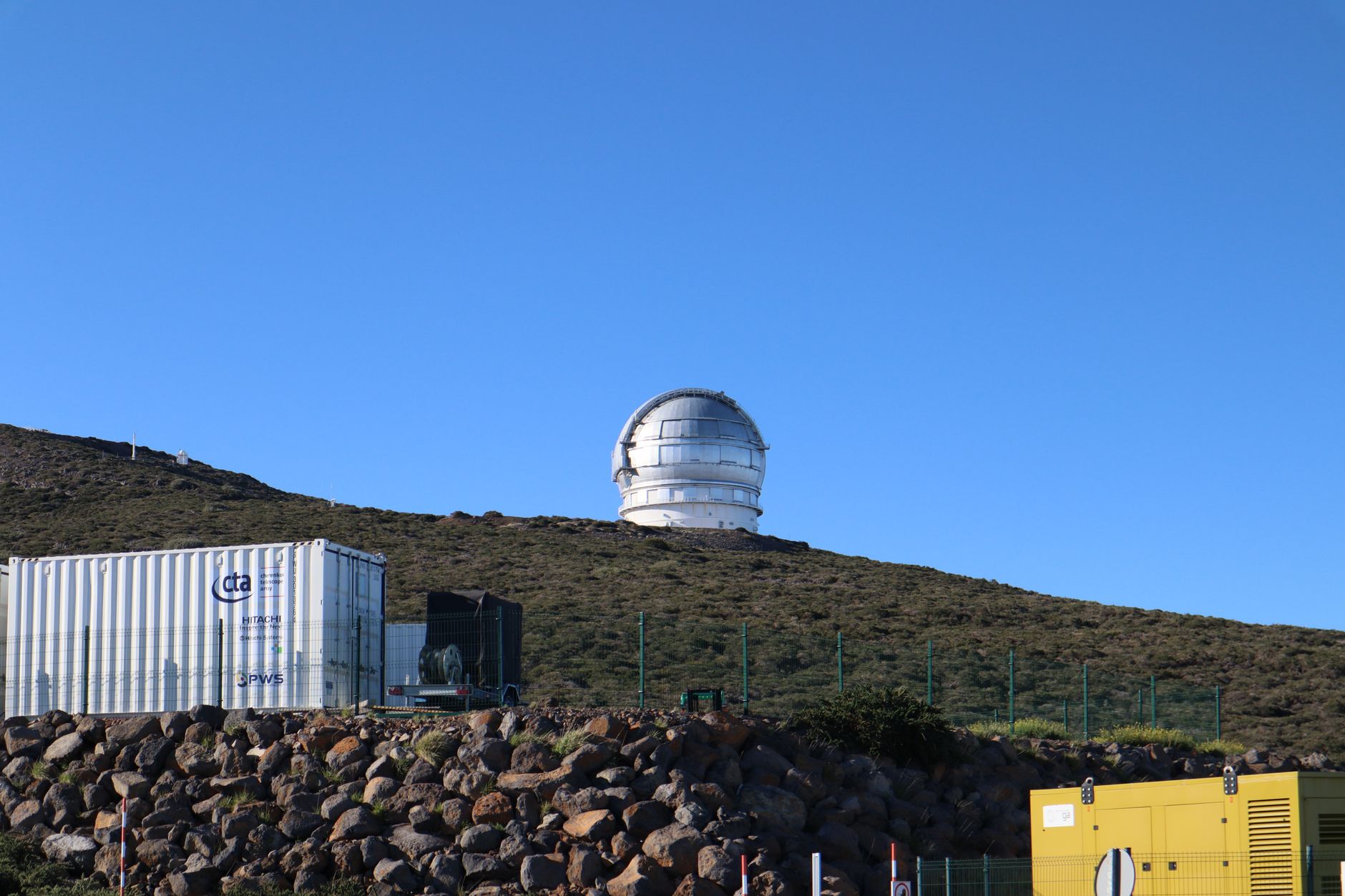
The Vera C. Rubin Observatory in Chile has now delivered its first pictures from a machine built for exactly that job.
The images released in June 2025 are not dark matter results, and nobody involved claims otherwise. They are proof that the system works: an 8.4-meter telescope on Cerro Pachón feeding a 3,200-megapixel camera, the largest digital camera ever built for astronomy. That proof matters because dark matter mapping lives or dies on measurement quality. A pretty picture is easy to produce, but a picture whose faintest galaxies have trustworthy shapes is much harder.
What the first frames actually demonstrate
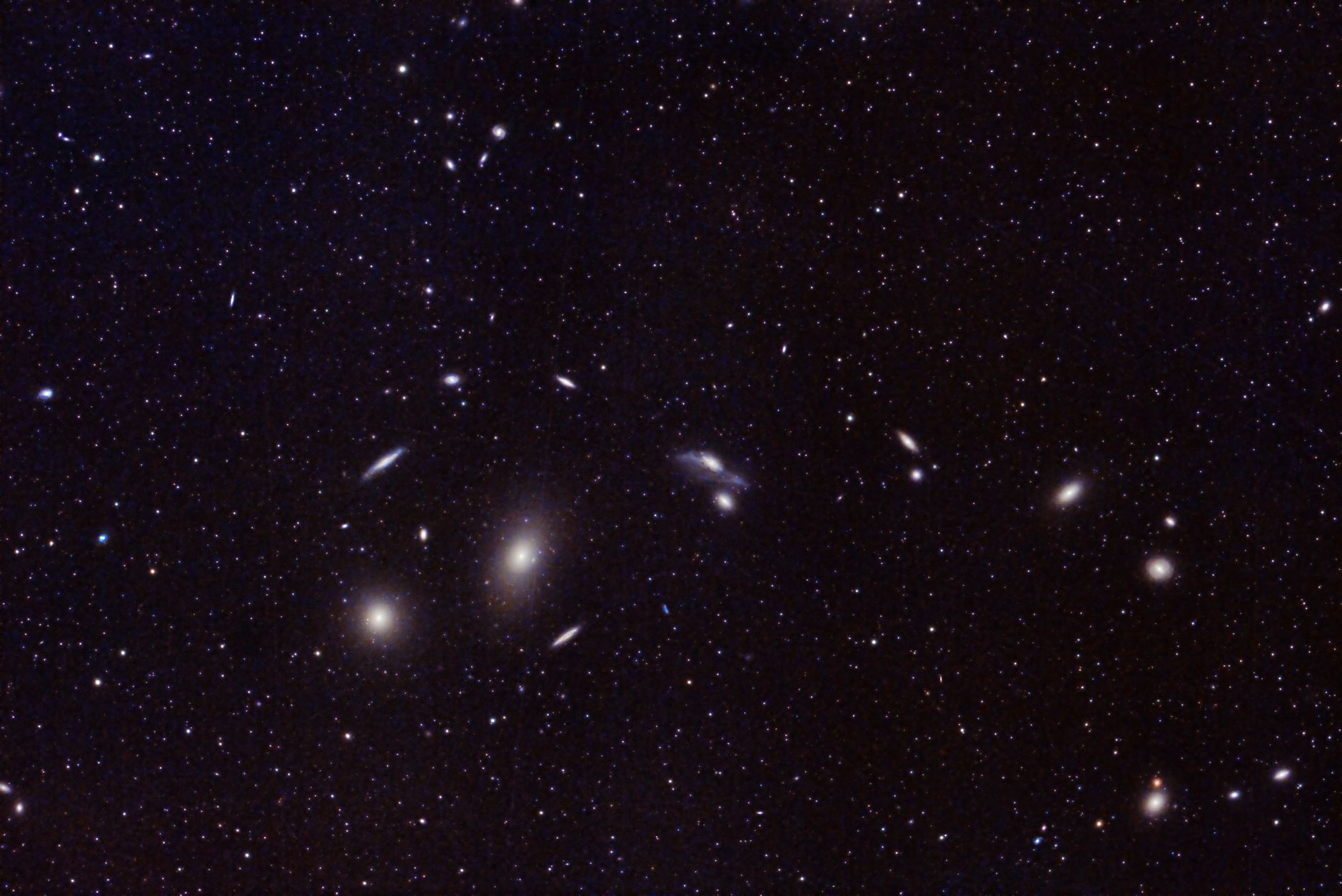
The headline images covered a region of the Virgo Cluster and the glowing Trifid and Lagoon nebulae. The nebulae drew the attention, but the cluster field is the one that matters for cosmology. A single frame held millions of galaxies, from bright nearby giants to smudges so faint that older surveys would have missed them. Each exposure from the camera spans an area of sky equal to dozens of full moons, so a field that size can be imaged to that depth in one pass.
Width and depth are usually a trade-off in astronomy. Space telescopes can go extremely deep, but they look at tiny patches. Wide ground-based surveys cover large areas but run out of faint galaxies quickly. Rubin is designed to avoid that trade by revisiting the same southern sky hundreds of times over a planned ten-year survey and stacking the exposures, so that each patch grows deeper while the whole map stays wide. The first images show a single visit, and the deeper stacked versions will look substantially better than what has been shown so far.
Sharpness is the quiet headline. Earth’s atmosphere blurs every ground-based image, smearing stars into soft blobs whose size and shape vary from night to night and even minute to minute. The first Rubin frames show stars as tight points across the entire field of view, and faint galaxies with visible internal structure rather than featureless fuzz. For a science that depends on measuring the tiny distortions in galaxy shapes, a consistent and well-characterized blur is worth more than raw light-gathering power.
From slightly warped galaxies to a map of the invisible
The technique at the center of Rubin’s dark matter program is weak gravitational lensing. Mass bends light, so the gravity of dark matter lying between us and a distant galaxy stretches that galaxy’s apparent shape by a tiny amount. The distortion on any single galaxy is far smaller than the natural variation in galaxy shapes, because galaxies are not intrinsically round to begin with. The signal only appears statistically: average the shapes of enough galaxies in a patch of sky and a faint, coherent pattern of alignment emerges, tracing where the unseen mass is concentrated. This is why the technique demands billions of galaxies rather than thousands, and why a frame containing millions in a single exposure is the right kind of demonstration.
The weakness of the method is that almost anything can fake the signal. Imperfect telescope optics, atmospheric turbulence, detector quirks and the way software fits shapes can all stretch galaxies in ways that look like lensing. A survey that mistakes its own instrument for dark matter is worse than no survey at all. The first images give the team real data for testing how the camera behaves across its focal plane, and the plan to observe each field many times with different orientations and conditions gives them a built-in way to separate genuine cosmic shear from instrumental ghosts.
The payoff is not a detection of the dark matter particle, which no optical survey can deliver. What Rubin can do is test what dark matter does at small scales, and that is where competing theories disagree most. Standard cold dark matter predicts a universe full of small clumps, so the Milky Way should be surrounded by many faint satellite galaxies and its stellar streams should carry gaps where invisible clumps have passed through. Warmer or self-interacting varieties would smooth those small structures away. By counting dwarf galaxies near the Milky Way, measuring lensing across enormous volumes, and watching stellar streams in unprecedented detail, Rubin can narrow the list of viable candidates. The full ten-year survey was still ahead when the first images appeared, so those answers will arrive slowly and in pieces.
A test that can fail
The most revealing outcome for Rubin may be a negative one: if the smallest dark matter clumps turn out to be missing, the cold dark matter model that has guided cosmology for decades will have to explain where they went, and a camera built to count faint galaxies will be the instrument asking.