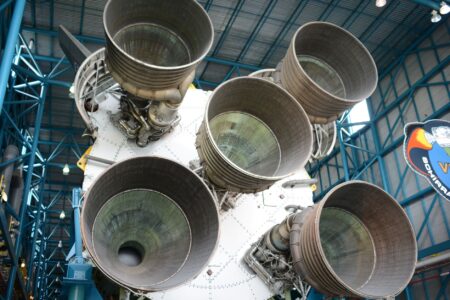





Most people alive today have never watched humans head for the Moon in real time. The last crew to leave lunar orbit was Apollo 17 in December 1972, and every crewed flight since has stayed within a few hundred miles of Earth.
Artemis II is designed to end that gap, though not with a landing.
Four astronauts will ride NASA’s Space Launch System rocket in an Orion capsule, loop around the far side of the Moon, and return to Earth on a trajectory of roughly ten days. There is no lunar lander on this flight and no surface walk. The goal is to prove that Orion can keep people alive and the vehicle can do its job with humans aboard, in deep space, where a quick return is not an option. Its predecessor, Artemis I, flew the same general route without a crew, carrying instrumented mannequins. That flight returned a great deal of data, and also a few problems that engineers have spent a long time studying. The launch date has moved more than once as those questions were worked through, and it may move again.

A Crew Chosen for a Test Flight, Not a Victory Lap
The crew is Reid Wiseman as commander, Victor Glover as pilot, Christina Koch as mission specialist, and Jeremy Hansen of the Canadian Space Agency as mission specialist. Wiseman is a former Navy test pilot who has served as chief of NASA’s Astronaut Office. Glover piloted the first operational SpaceX Crew Dragon flight to the International Space Station. Koch holds the record for the longest single spaceflight by a woman and took part in the first all-female spacewalks. Hansen, a former fighter pilot, will be the first Canadian to travel beyond low Earth orbit, and the first non-American to fly to the Moon’s vicinity.
That mix of test pilots and long-duration flyers is deliberate. Artemis II is a shakedown, and shakedowns need people who can diagnose a problem and describe it precisely. Training has centered on simulators that replicate Orion’s cabin, drills for emergency procedures, and practice in the orange launch-and-entry suits they will wear during the most dangerous phases of flight. The crew has also rehearsed water recovery, because Orion returns by parachute into the Pacific and the astronauts need to be ready for whatever condition the capsule is in when it lands.
The most closely watched hardware question is the heat shield. After Artemis I, inspectors found that parts of the shield had eroded in ways engineers had not predicted, with chunks of material breaking away during the skip-style reentry. NASA investigated the cause and has defended its plan to fly the mission with the crew aboard. Whether that reasoning persuades everyone is a separate matter, but it explains why this flight is a test and not a ceremony. Orion will meet the atmosphere at lunar-return speeds, and no amount of ground testing perfectly reproduces that heat.
What the Flight Path Actually Does
The mission begins with a launch from Kennedy Space Center and a period in a high orbit around Earth, where the crew checks life support, communications, and navigation before committing to the Moon. That staging step is intentional. If something is wrong with the capsule, it is far better to find out while the crew is still close enough to come home quickly. Once the systems are cleared, Orion fires its engine and heads outward on what is called a free-return trajectory.
The logic of a free return is simple: the Moon’s gravity does the work of sending the spacecraft back. Orion swings around the far side and is pulled into a path that brings it toward Earth without a major engine burn to turn around. If the main engine failed after departure, the physics would still carry the crew home. The same approach saved the Apollo 13 crew after their service module failed. The route should also take Orion thousands of miles beyond the far side of the Moon, which would put this crew farther from Earth than any humans have traveled.
Early in the flight, the astronauts will also take manual control of Orion for a proximity-operations demonstration, flying the capsule near its spent upper stage. It is a rehearsal for docking and close maneuvering, skills that later missions will need when Orion meets a lander in lunar orbit.
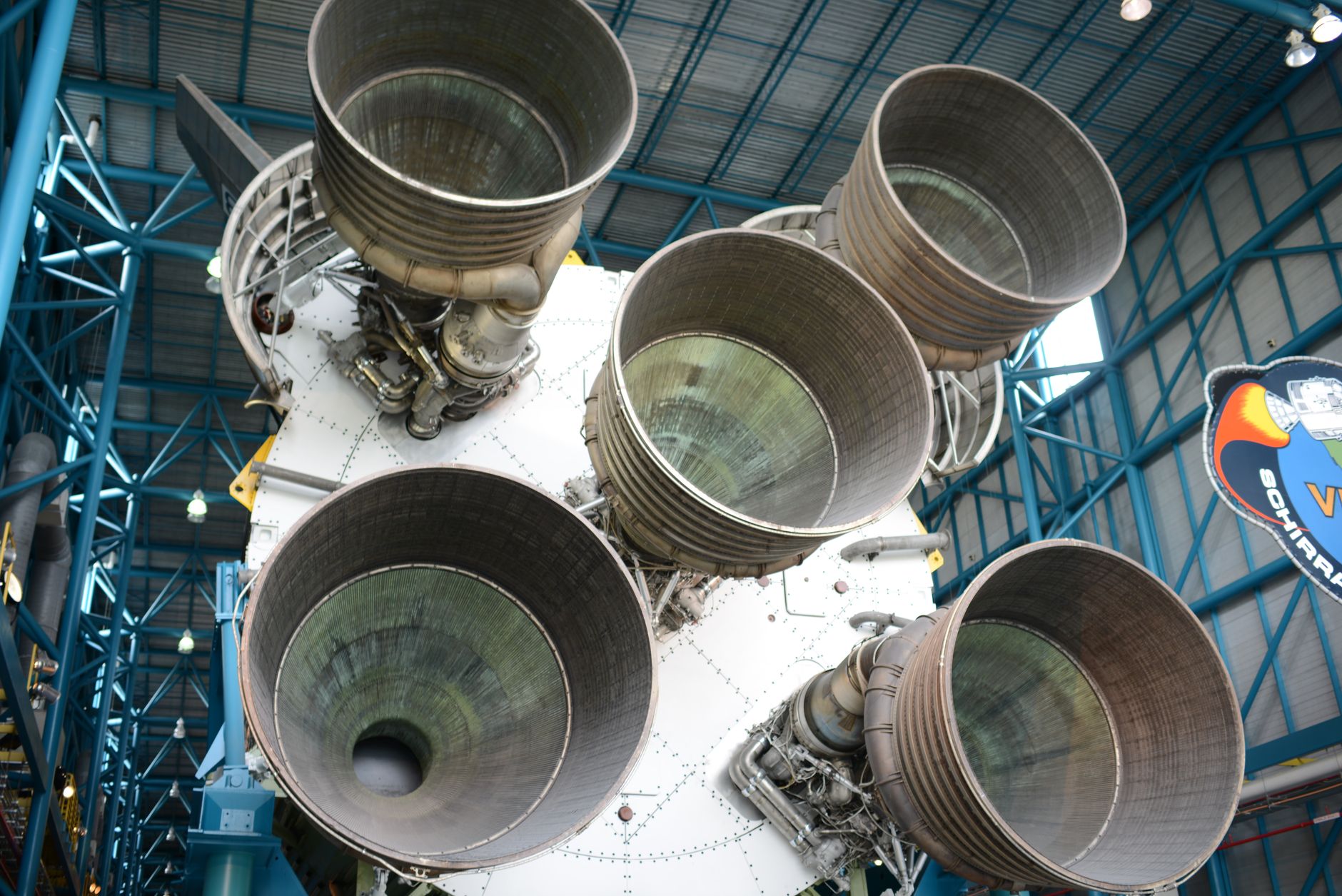
The Part No Simulator Covers
Every system on Orion can be tested on the ground, but nothing on Earth can simulate how four people feel, work, and trust a machine after days of watching the planet shrink behind them, which is why NASA is sending humans before it asks anyone to land.