




The Waiting Game No One Asked For
Crash Bandicoot used to be everywhere. From PlayStation billboards in the late 1990s to a genuine console rivalry with Mario, the marsupial from Wumpa Island occupied a specific corner of gaming culture that felt irreplaceable. Then Activision went quiet. No new mainline entry, no remaster announcements, no roadmap – just silence that has stretched long enough to feel deliberate.
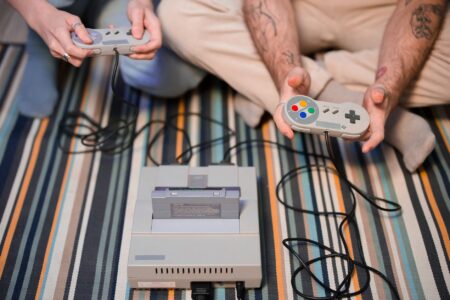
That silence is having an unintended consequence. Without a new release to chase, fans are cycling back to the Crash Bandicoot N. Sane Trilogy, the 2017 remaster collection that brought the original three PlayStation games back with updated visuals and tight controls. Steam activity logs, Reddit threads, and YouTube playthroughs all tell the same story: people are replaying something old because nothing new is coming.
Why Activision Stopped Talking
Crash 4: It’s About Time launched in 2020 and received strong reviews. It was a genuinely difficult platformer that expanded the lore without embarrassing the legacy. And then – nothing. Activision has not announced a follow-up, a spin-off, or even a port to newer hardware. The studio Toys for Bob, which developed Crash 4, was restructured in 2024 after Microsoft’s acquisition of Activision closed, with many of its developers departing to form an independent studio. Whatever Crash pipeline existed internally appears to have stalled.
The business logic, from Activision’s side, probably makes sense. Call of Duty consumes resources and produces reliable revenue. A platformer aimed at nostalgia-driven players in their late 20s and 30s is a harder commercial pitch. But the cost of that calculation is brand erosion – when a franchise goes dark for years, the audience doesn’t wait patiently. They either move on or, in Crash’s case, go backward.
The Trilogy’s Second Life
The N. Sane Trilogy launched at a moment when remaster culture was peaking. It sold well, generated goodwill, and proved that Crash still had commercial viability outside of pure nostalgia. Vicarious Visions handled the development with enough care that the games felt authentically restored rather than lazily upscaled. That quality is exactly why players keep returning to it now – it holds up as a standalone product, not just a museum piece.
Community activity around the Trilogy has a particular character. Players aren’t just replaying for the story. They’re going for time trials, comparing notes on difficulty spikes, and posting clips of the infamous Stormy Ascent level – a cut stage restored for the remaster – as if discovering it for the first time. This is the behavior of a fanbase with no forward momentum, redirecting energy into depth rather than anticipation.
The original three Crash games – Crash Bandicoot, Cortex Strikes Back, and Warped – each have enough mechanical variety to reward repeated play. The first game is brutally vertical and punishing. The second loosens up. The third introduces vehicles and time travel, essentially functioning as a level-design showcase. Spending time across all three in a single sitting is a legitimate 15-plus hour experience, which explains why returning players aren’t burning through the collection quickly.
There’s also something specific happening with younger players discovering the series through the Trilogy rather than the originals. For anyone under 25, Crash is the remaster, not the grey PlayStation disc. That generational shift matters because it means the franchise has a second origin point that Activision hasn’t followed up on – a built-in audience who finished N. Sane and then found that Crash 4 was the last thing on the shelf.
A Pattern Activision Should Recognize
This isn’t the first time franchise silence has pushed fans backward into catalog titles. Activision has watched this happen with Tony Hawk’s Pro Skater, where years of gaps between entries drove players back to older titles with obsessive dedication. The difference is that Tony Hawk eventually got the 1+2 remaster treatment, which gave the community somewhere to land. Crash’s community is waiting for that equivalent signal and not getting one.
What makes the silence particularly frustrating is that the infrastructure is there. The N. Sane Trilogy is available on modern platforms. Crash 4 works on PlayStation 5 and Xbox Series consoles. The brand hasn’t gone dark due to technical obstacles – it’s a strategic choice, or possibly an organizational one following the Microsoft transition. Either way, the gap keeps widening.
What Fans Are Actually Doing
Beyond replaying the trilogy, the Crash community has taken to modding, particularly on PC. Custom levels, ROM hacks of the original PlayStation games, and fan-made extensions of the N. Sane engine have given technically-inclined players a creative outlet. It’s the kind of grassroots activity that typically signals a franchise the publisher has underserved – where fans are building because the developer isn’t.
Fan campaigns calling for a Crash 5, or at minimum a Crash 4 port to Nintendo Switch 2, circulate periodically on social media without generating any official response. Activision’s social accounts for the franchise have been largely inactive, posting sporadically with no new content teasers attached. Silence from a brand account reads differently now than it did a decade ago – it registers as either abandonment or a carefully managed quiet before an announcement. The Crash community has been assuming the latter for long enough that some have stopped assuming anything at all.
The most telling detail might be this: speedrunning activity for Crash Bandicoot on platforms like Speedrun.com has remained consistently active through the entire drought. Players are still finding new routes, shaving seconds off records, and competing in a game released – in its original form – in 1996. A franchise with that kind of staying power in its oldest entries doesn’t go irrelevant quietly. It just sits there, waiting for someone at Activision to notice it’s still running.