




The Long Wait for Pressure-Sensitive Triggers on Portable Fighting Sticks
Fighting game controllers have always occupied a strange corner of gaming hardware. Arcade sticks, fight pads, and leverless controllers each serve a dedicated community that prizes precision over portability – and for years, handheld versions of these controllers were stripped-down compromises, trading input fidelity for a smaller form factor. The one feature that kept disappearing in the transition to portable form? Analog triggers.
That is finally starting to change.
A growing wave of controller manufacturers is now building handheld and portable fighting game peripherals with full analog trigger support, closing a gap that has frustrated competitive players who want to practice or play on the go without switching to a standard gamepad. The shift is quiet but meaningful, and it says something specific about where the fighting game community is heading as a hardware consumer base.
Why Analog Triggers Were Skipped in the First Place
The original logic made sense. Traditional arcade sticks – the ones sitting on a desk or lap during a tournament – do not need analog triggers at all. Street Fighter, Tekken, Mortal Kombat, and most competitive fighting titles map their shoulder inputs to digital buttons. A trigger is either pressed or it is not, and the gradual pressure range that analog triggers offer serves racing games and shooters far more than it serves a quarter-circle fireball. So when manufacturers started shrinking fight pads and leverless controllers into portable formats, analog triggers were an easy cut to make.
The problem is that the fighting game community does not exist in isolation anymore. Players who want to use the same controller for casual sessions on a Steam Deck, a handheld PC, or even certain console games that do use analog inputs found themselves constantly swapping devices. A portable fight pad without analog triggers simply cannot double as a general-purpose handheld controller, which limits its appeal and daily utility. For a piece of hardware that already commands a premium price, that limitation hits harder than it used to.
There is also a platform compliance issue. Certain certification requirements for controllers on modern consoles and handhelds increasingly expect trigger axes to be present and functional. A controller that reports missing axes can cause software compatibility problems, even in games that never actually use them. Analog triggers went from a nice-to-have to a quiet technical requirement that manufacturers could no longer ignore.
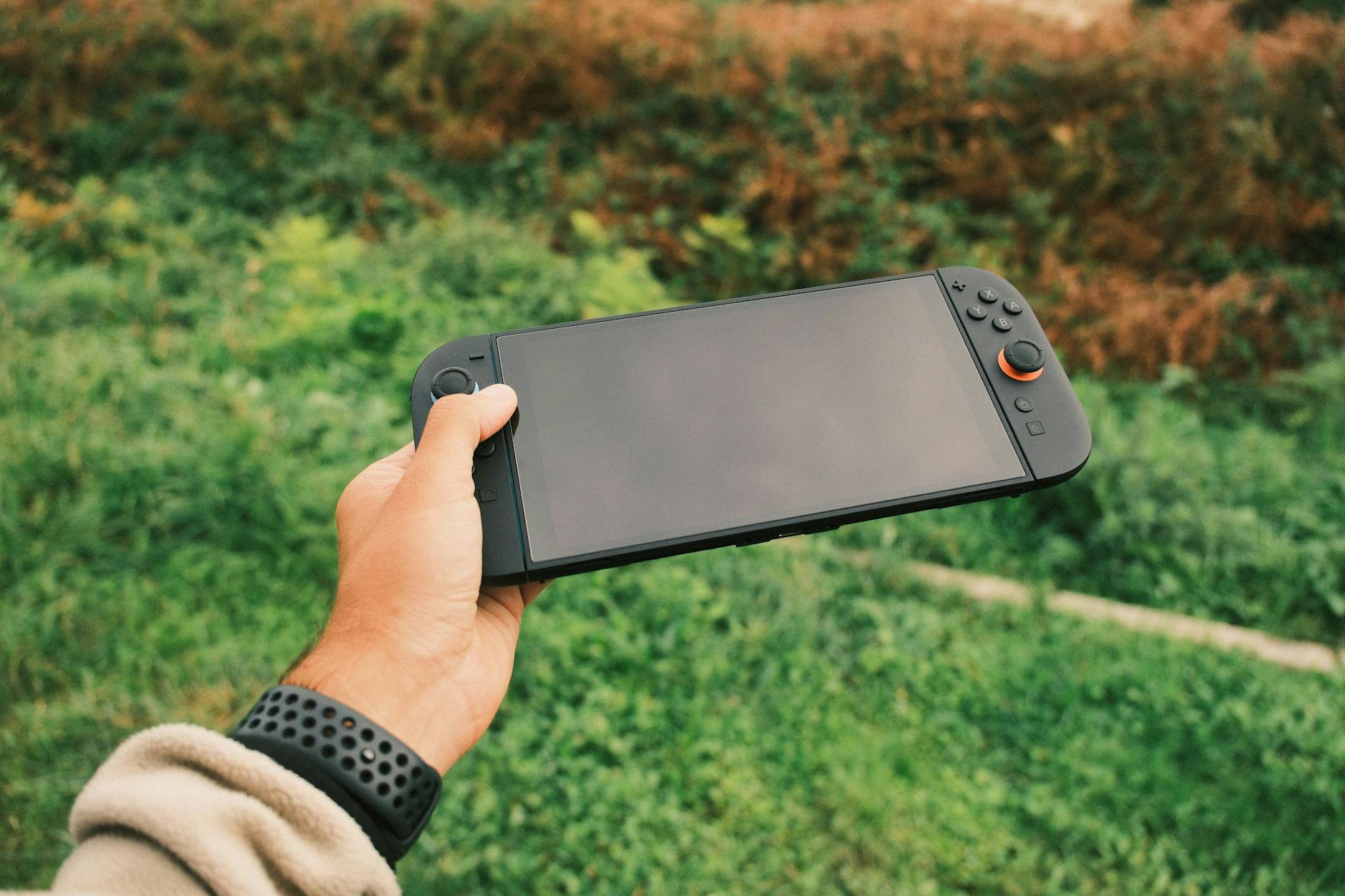
What the New Hardware Actually Looks Like
The new generation of portable fighting controllers is taking a few different approaches to adding analog triggers without bloating the form factor. Some manufacturers are integrating Hall effect sensors into slim trigger mechanisms – the same technology that hall effect adoption in competitive keyboards has pushed into mainstream awareness – which allows for smooth analog output without the wear and drift that traditional potentiometer-based triggers develop over time. Others are using optical sensors to register trigger depth, keeping the physical profile low while still generating a full analog axis signal.
What is notable is that these triggers are being designed with the fighting game audience’s priorities in mind. The travel distance is intentionally short. The actuation point is crisp enough that players can still treat them as digital inputs when the game demands it, while the controller simultaneously reports full analog data to the system. Some designs include hardware toggles to lock the triggers into digital mode entirely, giving players control over how the input registers at a firmware level. That kind of dual-mode functionality would have been overengineering on a standard fight pad, but in a portable device that travels between platforms, it is practical.
Build quality on these portable units has also matured. Earlier portable fight pads often felt like stripped-down budget products – thin shells, hollow buttons, mushy directional inputs. The current batch is arriving with the kind of component quality that players expect from full-size tournament sticks: Sanwa or Sanwa-compatible buttons, tight leverless panels with low-profile switches, and USB-C connectivity with wired latency that matches or beats wireless alternatives. The analog triggers are the headline addition, but they are arriving as part of a broader hardware maturation.
What This Means for Competitive and Casual Players
For the competitive player, a portable fighting controller with proper analog triggers opens up practice options that did not exist cleanly before. Flying to a tournament no longer means choosing between bringing a full-size stick and using a borrowed or rental controller at the venue. A device that fits in a backpack, passes platform compliance checks without workarounds, and inputs with the same precision as a desk setup changes the calculation on travel hardware significantly.
Casual players benefit differently. The fighting game community has grown substantially through titles like Street Fighter 6, Guilty Gear Strive, and Tekken 8 bringing in players who are not coming from an arcade background. Many of those newer players are also console or PC generalists who want one controller that handles everything. A portable fighting controller that also works correctly for other genres – because the analog triggers are there and functional – is a much easier sell than a dedicated single-use peripheral.
The market for these controllers is still small compared to standard gamepads, and the price points reflect the niche manufacturing involved. But the direction is clear: portable fighting hardware is no longer being treated as a stripped feature set. The question now is whether the major players in the space – the brands that dominate tournament scenes and community recommendations – move to analog trigger support as a standard specification, or whether it stays a premium differentiator that only some products bother to include. Given how slowly this segment has historically moved on hardware improvements, that answer might take another product cycle or two to solidify.