




Fish populations in marine protected areas are being counted not by divers with clipboards, but by underwater microphones that can distinguish between the grunt of a grouper and the click of a parrotfish. This acoustic revolution is transforming how marine biologists monitor ocean ecosystems, providing data that traditional visual surveys could never capture.
Marine protected areas worldwide are deploying sophisticated hydrophone networks that record the biological soundscape of coral reefs and coastal waters. The technology captures everything from the territorial calls of damselfish to the feeding sounds of sea urchins scraping algae off rocks. Unlike scuba surveys limited by daylight hours and human endurance, these acoustic sensors operate continuously, creating comprehensive audio libraries of marine life activity.
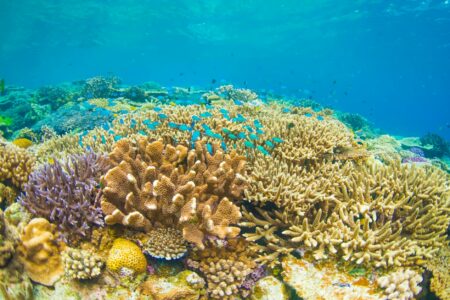
The Great Barrier Marine Park Authority began using acoustic monitoring in 2019, placing hydrophones across different reef zones to track fish recovery after coral bleaching events. The system records 24 hours daily, with artificial intelligence algorithms trained to identify specific species by their unique vocalizations. Researchers discovered that healthy reefs produce a complex symphony of biological sounds, while degraded areas fall eerily quiet.

The Science Behind Fish Sounds
Marine animals produce sounds for communication, navigation, and feeding in ways scientists are only beginning to understand. Groupers create low-frequency booms during spawning aggregations that can travel miles underwater. Clownfish produce aggressive chattering sounds when defending their anemone homes. Even seemingly silent creatures like sea cucumbers generate detectable feeding sounds as they process sand through their digestive systems.
Acoustic monitoring captures these biological signatures with hydrophones sensitive enough to detect sounds across frequencies from 20 Hz to 20 kHz. The recordings reveal daily patterns of fish activity, with dawn and dusk choruses indicating feeding times and spawning behaviors. Species-specific calls help researchers identify which fish are present without the disturbance of diving operations.
Dr. Sarah Simpson from the Australian Institute of Marine Science explains that acoustic data provides population density estimates by analyzing call frequency and amplitude. A reef with numerous territorial damselfish will produce constant low-level chatter, while areas with large predatory fish generate periodic low-frequency calls that indicate mature breeding populations.
Technology Meets Conservation
Modern acoustic monitoring systems combine waterproof recording devices with machine learning algorithms that process thousands of hours of underwater audio. The technology builds on advances used by deep sea research vessels for AI-powered species classification, adapting pattern recognition software to identify marine animal vocalizations.
Researchers deploy autonomous hydrophones that record continuously for months before being retrieved and replaced. Solar panels power surface buoys connected to underwater microphones, while battery-powered units can operate independently on the seafloor. The devices withstand saltwater corrosion and extreme pressure while maintaining audio quality sufficient for species identification.
Machine learning models trained on verified fish call libraries can automatically classify recordings, identifying species presence and estimating abundance. The algorithms distinguish between biological sounds and background noise from waves, boat engines, and human activities. Advanced systems even filter out the calls of marine mammals to focus specifically on fish populations.

Processing acoustic data requires significant computational power, with researchers using high-performance graphics cards originally designed for gaming to analyze complex audio patterns. The parallel processing capabilities of modern GPUs accelerate the machine learning algorithms that sift through terabytes of underwater recordings, identifying subtle acoustic signatures that indicate species diversity and ecosystem health.
Real-World Applications and Results
Marine protected areas in California, Florida, and Australia now use acoustic monitoring as a primary tool for measuring conservation success. The Channel Islands National Marine Sanctuary deployed hydrophone arrays that documented fish population recovery following the establishment of no-fishing zones. Recordings showed increased call diversity and frequency as fish communities rebuilt over several years.
In the Caribbean, acoustic monitoring revealed that parrotfish populations remain stable in protected areas while declining in fished regions. The distinctive scraping sounds of parrotfish feeding on algae-covered coral provide a direct measure of these critical herbivores that help maintain reef health. Traditional visual surveys often missed nocturnal feeding activity that acoustic sensors capture continuously.
The Dry Tortugas National Park uses underwater microphones to monitor spawning aggregations of commercially important species like grouper and snapper. These fish gather in predictable locations during specific seasons, producing intense acoustic signatures during reproductive activity. Park managers use this data to adjust protection measures and coordinate with fishing regulations in surrounding waters.
Acoustic monitoring also detects illegal fishing activity within protected areas, as boat engines and fish finders produce distinct sound signatures that trigger alerts. The passive monitoring approach avoids the confrontational aspects of direct enforcement while providing evidence of regulation violations.
Challenges and Future Developments
Despite promising results, acoustic monitoring faces technical limitations that researchers continue to address. Background noise from shipping traffic, construction, and natural sources can mask fish calls, requiring sophisticated filtering techniques. Storm damage poses risks to expensive equipment deployed in harsh marine environments.
Species identification remains challenging for fish that produce similar vocalizations or remain acoustically inactive. Many commercially important species like tuna and mackerel generate few detectable sounds, limiting the technique’s applicability for some fisheries management applications. Researchers are developing complementary approaches combining acoustic data with environmental DNA sampling and traditional survey methods.
The cost of acoustic monitoring systems continues to decrease as sensor technology advances and data processing becomes more efficient. Standardized protocols for equipment deployment and data analysis are emerging, allowing better comparison of results between different marine protected areas. International collaborations are building acoustic libraries that improve species identification algorithms across different ocean regions.
Marine protected areas represent the future of ocean conservation, and acoustic monitoring provides the technological foundation for measuring their success. As underwater microphone networks expand and machine learning algorithms improve, this invisible revolution will transform our understanding of marine ecosystems. The sounds of healthy oceans, once lost in the vastness of the sea, now guide conservation efforts toward a more sustainable future for our marine resources.
Frequently Asked Questions
How do underwater microphones detect fish populations?
Hydrophones record fish vocalizations and feeding sounds, with AI algorithms identifying species by their unique acoustic signatures.
What advantages does acoustic monitoring have over diving surveys?
Acoustic systems operate continuously day and night, capture nocturnal activity, and avoid disturbing marine life during observations.