




VR headset sales jumped 31% in 2023, but the most surprising growth came from an unlikely genre: puzzle games. While everyone expected action shooters and immersive adventures to dominate virtual reality, indie studios are quietly building empires around mind-bending spatial puzzles that leverage VR’s unique capabilities.
Small development teams from Montreal to Melbourne are discovering that puzzle games offer the perfect entry point into VR development. Unlike complex open-world adventures that require massive budgets and years of production, puzzle games can be prototyped quickly and iterated based on player feedback. Studios like Schell Games proved this with “I Expect You To Die,” which became a VR bestseller despite being developed by a team of fewer than 50 people.
The shift represents a fundamental change in how indie developers approach VR. Rather than trying to compete with AAA studios on spectacle, they’re focusing on gameplay mechanics that simply don’t work on traditional screens.
The Perfect Storm of Development Advantages
VR puzzle games solve multiple problems that have plagued indie VR development since the Oculus Rift launched. Motion sickness, the biggest barrier to VR adoption, becomes virtually nonexistent when players remain stationary while manipulating objects with their hands. This eliminates the need for complex comfort settings and locomotion systems that can take months to perfect.
Development costs stay manageable because puzzle environments are typically contained spaces rather than sprawling worlds. A brilliant puzzle game might take place entirely in a single room, laboratory, or spaceship cabin. Studios can focus their limited resources on perfecting interaction mechanics rather than building vast landscapes.
The genre also plays to VR’s greatest strength: spatial reasoning. When players can physically reach out and rotate a three-dimensional object, examine it from every angle, and manipulate multiple pieces simultaneously, puzzle-solving becomes intuitive in ways that flat screens can never match. Red Matter Studio capitalized on this with their acclaimed sci-fi puzzle series, creating challenges that feel natural in VR but would be clunky with a traditional controller.
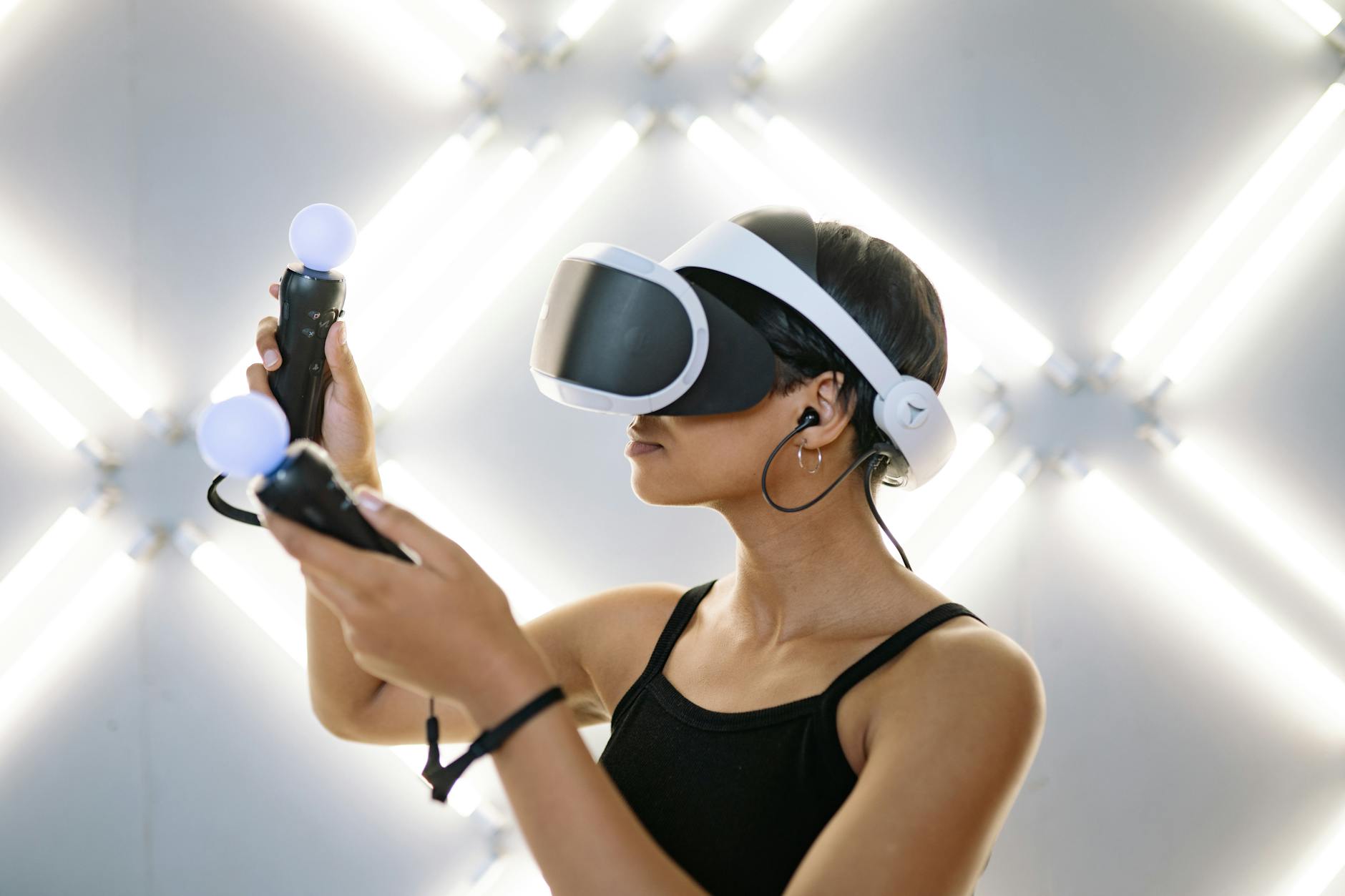
Technical requirements remain relatively modest compared to action games. Puzzle games typically feature fewer dynamic elements, simpler physics calculations, and more predictable performance loads. This makes them ideal for the wide range of VR headsets available today, from high-end PC systems to standalone devices like the Meta Quest series.
Market Dynamics Favor Puzzle Innovation
The VR market’s current demographics create ideal conditions for puzzle game success. Early VR adopters tend to be older and more affluent than typical gaming audiences, with many seeking thoughtful, meditative experiences rather than fast-paced action. These players often prefer games they can enjoy in short sessions without the commitment required by lengthy RPGs or competitive multiplayers.
Distribution platforms are actively promoting puzzle content. Steam VR’s featured sections regularly highlight innovative puzzle games, while Meta’s Quest Store has created dedicated categories that give small studios visibility alongside major publishers. The algorithms favor games with high completion rates and positive reviews – metrics where well-designed puzzle games consistently excel.
Streaming and content creation have become unexpected marketing channels. Puzzle games create natural “aha moments” that translate perfectly to YouTube and Twitch content. Viewers enjoy watching creators struggle with challenging spatial problems and celebrate breakthrough moments, generating organic publicity that indie studios couldn’t afford through traditional advertising.

The success of titles like “The Room VR” and “Fisherman’s Tale” proved that puzzle games could achieve mainstream VR success. These hits demonstrated that players would pay premium prices for innovative puzzle experiences, creating a sustainable business model for indie developers.
Technical Innovation Through Constraint
Working within puzzle game limitations has sparked remarkable technical creativity. Studios are developing new interaction paradigms that could influence all VR development. Hand tracking integration works particularly well in puzzle contexts, where precise finger movements feel natural rather than frustrating.
Audio design has become a crucial differentiator. Since puzzle games often take place in confined spaces, spatial audio can provide essential clues and feedback. Studios are experimenting with 3D soundscapes that guide players toward solutions without breaking immersion.
User interface innovation thrives in puzzle environments. Rather than floating menus that break presence, developers integrate information into the game world itself. Buttons become physical switches, inventory systems transform into tool belts or workbenches, and progress tracking appears as environmental elements.
The iterative nature of puzzle development allows for rapid prototyping of new VR interaction methods. A studio might test ten different ways for players to manipulate objects before settling on the most intuitive approach. These discoveries often get shared within the development community, advancing the entire medium.
Physics simulation accuracy becomes paramount in puzzle games where players expect realistic object behavior. Studios are pushing the boundaries of real-time physics engines, creating more believable interactions between virtual objects and human hands.
Genre Evolution and Market Expansion
Puzzle games are evolving beyond traditional block-matching and spatial reasoning challenges. Narrative puzzle games combine storytelling with problem-solving, creating emotionally engaging experiences that appeal to broader audiences. Studios are experimenting with time manipulation, perspective shifts, and collaborative multiplayer elements.
The genre’s success is attracting investment from larger publishers who previously overlooked VR development. This influx of funding allows indie studios to expand their teams and tackle more ambitious projects while maintaining their creative independence.
Educational applications are opening new revenue streams. Museums, schools, and training organizations are commissioning custom puzzle games that teach everything from molecular chemistry to historical events. This B2B market provides steady income that subsidizes experimental consumer projects.
Cross-platform development is becoming increasingly important as VR hardware diversifies. Studios that master puzzle game development on multiple VR platforms position themselves for sustained success as the market evolves.

The puzzle game boom in VR represents more than a temporary trend – it’s establishing the foundation for the medium’s future. As these indie studios perfect their craft and demonstrate sustainable business models, they’re proving that creative innovation matters more than massive budgets in virtual reality development. The next generation of VR experiences will likely build upon the interaction principles and design philosophies pioneered by today’s puzzle game creators.
The genre’s continued growth seems inevitable as VR hardware becomes more accessible and new developers discover the creative possibilities within spatial problem-solving. What started as a practical choice for resource-constrained indie studios has evolved into a vibrant creative movement that’s reshaping expectations for what virtual reality can achieve.
Frequently Asked Questions
Why are puzzle games popular in VR development?
They require smaller budgets, cause less motion sickness, and showcase VR’s spatial interaction strengths better than other genres.
What makes VR puzzle games successful commercially?
High completion rates, positive reviews, natural streaming content, and appeal to VR’s older, affluent demographic create strong sales.