




The future of wearable technology is literally right before your eyes. Major tech companies are racing to deliver the first commercially viable smart contact lenses with built-in augmented reality displays, promising to revolutionize how we interact with digital information without pulling out phones or checking smartwatches.
These ultra-thin devices pack sophisticated electronics into lenses thinner than human hair, overlaying digital content directly onto your field of vision. Unlike bulky AR headsets, smart contact lenses offer an invisible, hands-free computing experience that could fundamentally change daily life – from navigation and notifications to health monitoring and workplace productivity.

The Technology Behind Smart Contact Lenses
Smart contact lenses represent a convergence of multiple advanced technologies compressed into an incredibly small form factor. The core challenge involves embedding microprocessors, wireless communication chips, and display elements into soft, biocompatible materials that can safely rest on the eye’s surface.
Current prototypes use micro-LEDs or electrochromic displays to generate visual information. These displays must operate at extremely low power levels to avoid heating the eye while providing sufficient brightness to be visible in various lighting conditions. The electronics are typically arranged around the lens perimeter, leaving the central optical zone clear for natural vision.
Power delivery remains a critical hurdle. Some designs incorporate tiny batteries recharged through inductive coupling, while others explore harvesting energy from eye movements or ambient radio waves. Wireless communication protocols like Bluetooth Low Energy enable data exchange with smartphones or other devices, though the antenna design must work within the lens’s curved, wet environment.
Safety standards for these devices are particularly stringent. The materials must pass extensive biocompatibility testing, and the electronics must operate without generating heat or toxic byproducts. Regulatory approval processes involve multiple phases of testing, from laboratory studies to extended human trials.
Leading Companies and Current Developments
Several major technology companies have invested heavily in smart contact lens development, each pursuing different technical approaches and applications.
Google’s parent company Alphabet has been working on smart contact lenses for over a decade through various divisions. Their early projects focused on glucose monitoring for diabetes management, using tiny sensors to measure glucose levels in tears. More recent patent filings suggest expanded capabilities including basic AR display functionality.
Samsung has demonstrated prototypes with built-in cameras and wireless connectivity, envisioning applications from photography to augmented reality gaming. Their designs incorporate piezoelectric sensors that could theoretically be controlled by deliberate eye movements or blinks.
Apple has filed numerous patents related to contact lens technologies, suggesting development of devices with health monitoring capabilities and basic display functions. However, the company has remained characteristically secretive about specific product timelines or features.
Startup companies like Mojo Vision have focused specifically on AR contact lenses, claiming breakthrough achievements in power management and display resolution. Their prototypes reportedly include eye-tracking sensors and gesture recognition capabilities.
The wearable technology trend extends beyond contact lenses. Smart rings are increasingly replacing traditional fitness trackers for health monitoring, showing how miniaturization is enabling new categories of wearable devices.
Potential Applications and User Experiences
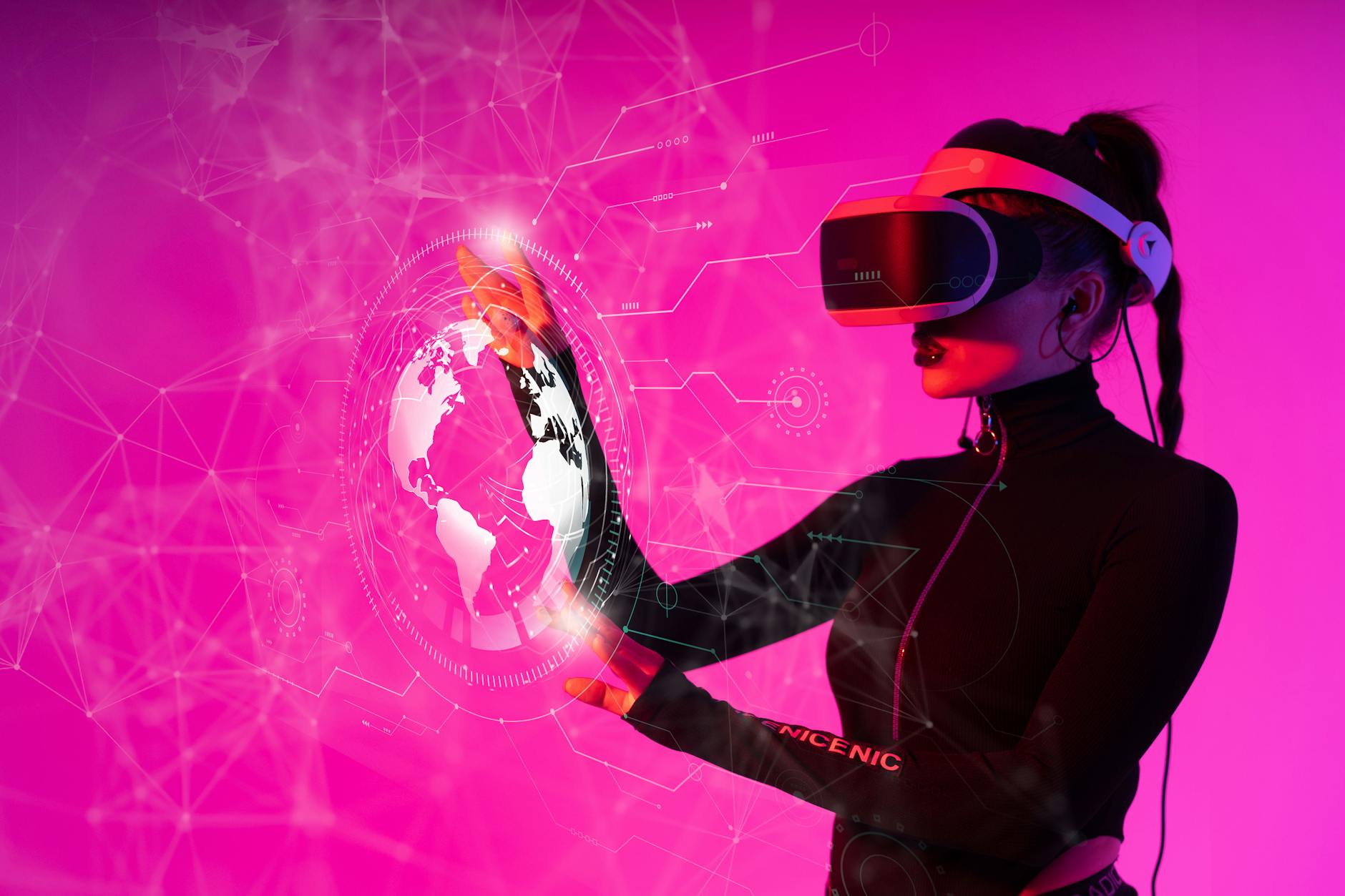
Smart contact lenses with AR displays could transform numerous aspects of daily life through seamless information overlay. Navigation represents one of the most compelling use cases – instead of looking down at phones for directions, users would see turn-by-turn guidance directly in their visual field, with arrows and distance information appearing to float over real-world landmarks.
Communication notifications could appear as subtle text overlays, allowing users to read messages or caller information without interrupting conversations or activities. The interface might respond to eye movements or subtle gestures, enabling hands-free interaction with digital content.
Professional applications show particular promise. Surgeons could access patient data or procedural guidance without looking away from their work. Mechanics could see repair instructions overlaid on equipment. Language learners could receive real-time translations of foreign text or speech, creating immersive learning experiences.
Health monitoring capabilities could extend beyond basic fitness tracking. The devices might continuously monitor intraocular pressure for glaucoma detection, track eye movement patterns for neurological assessment, or analyze tear composition for various health indicators. This connects to broader trends in wearable health technology, where devices are achieving increasingly sophisticated monitoring capabilities.
Gaming and entertainment applications could create entirely new categories of augmented reality experiences. Virtual objects could appear naturally integrated into real environments, while multiplayer games could overlay shared virtual elements onto physical spaces.
Privacy and social implications require careful consideration. Unlike smartphones or smartwatches, contact lens displays would be completely invisible to others, raising questions about covert recording or information access. Social norms around appropriate usage would need to develop alongside the technology.
Technical Challenges and Future Outlook
Despite promising prototypes, significant technical hurdles remain before smart contact lenses become mainstream consumer products. Power consumption continues to be the primary challenge – current display and processing technologies require more energy than can be safely delivered to devices resting on the eye.
Display resolution and brightness must improve to provide useful AR experiences across different lighting conditions. Current micro-LED arrays can produce basic symbols and simple graphics, but high-resolution text and complex imagery remain difficult to achieve at the required power levels.
Manufacturing costs present another barrier to adoption. The precision required to embed functional electronics into contact lenses drives production expenses far above traditional corrective lenses. Scaling manufacturing to achieve consumer-friendly pricing will require significant technological advances and production volume.
Regulatory approval processes for medical devices worn in direct eye contact are necessarily thorough and time-consuming. Even basic functionality requires extensive safety testing, while more advanced features like continuous health monitoring face additional scrutiny.
User acceptance factors include comfort during extended wear, ease of insertion and removal, and compatibility with existing vision correction needs. Many potential users already wear traditional contact lenses or glasses, creating additional requirements for prescription optics integration.
Market predictions vary widely, but most industry analysts expect limited commercial availability within the next five to ten years, starting with specialized applications like medical monitoring or industrial use. Consumer adoption would likely follow several years later as manufacturing costs decrease and regulatory pathways become established.
The convergence of multiple technology trends – miniaturized electronics, advanced materials science, wireless power transfer, and AI processing – suggests that smart contact lenses represent an inevitable evolution rather than speculative fiction. Early adopters may initially accept limited functionality and higher costs for the convenience of hands-free computing, gradually driving broader market adoption.
Smart contact lenses with AR displays promise to make digital information as natural and accessible as human vision itself. While significant technical challenges remain, the potential to seamlessly blend digital and physical worlds directly through our eyes represents one of the most compelling frontiers in wearable technology. The companies that successfully navigate the complex engineering, regulatory, and manufacturing challenges will likely define the next major shift in how humans interact with technology.
Frequently Asked Questions
How do smart contact lenses display information?
They use micro-LEDs or electrochromic displays embedded around the lens perimeter to overlay digital content directly onto your field of vision.
Are smart contact lenses safe to wear?
Current prototypes undergo extensive biocompatibility testing, but commercial versions require regulatory approval and must operate without generating heat or toxic substances.