




The Quiet Before the Storm
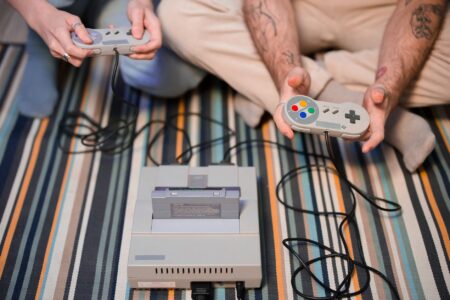
Atlus has said almost nothing about Persona 6. No trailer, no teaser, no confirmed release window – just a distant acknowledgment that the studio is working on something. For a franchise with one of the most passionate fanbases in JRPGs, that silence has created a vacuum, and fans are filling it the only way they know how: by replaying everything Atlus has ever made.
The game quietly benefiting most from this waiting-room energy is Catherine: Full Body, the 2019 remaster of Atlus’s 2011 puzzle-horror game. Streaming numbers are climbing, speedrun leaderboards are active again, and social media posts tagging Atlus are mixing Catherine content with Persona 6 speculation in equal measure. It is a strange loop – the less Atlus says, the more its older catalog gets played.
Why Catherine and Not Something Else
Catherine: Full Body is not an obvious default replay. It is punishing, narratively divisive, and structurally unlike Persona. The block-pushing nightmare sequences require real mechanical patience, and its storylines – particularly the added Rin route – have always split the fanbase. And yet it keeps coming up whenever Persona fans need something to do with their hands while waiting. The connection is partly aesthetic: Full Body has that same Atlus visual language, the same Shoji Meguro musical DNA, the same stylized UI fingerprints that make a game feel instantly familiar to anyone who has spent 80 hours in Persona 5.
There is also a theory-crafting angle driving the revisits. Catherine: Full Body shares a loose continuity thread with the Persona universe – the Velvet Room is referenced, and certain characters have been subject to years of crossover speculation. Every time a new detail about Persona 6 surfaces, even a rumor, players go back to Full Body to look for patterns. It has become something of a ritual: if Atlus is being secretive, maybe the answers are already sitting in an older game.

What the Speedrun Community Is Doing With It
Speedrunning Catherine: Full Body has always been a niche pursuit, mostly because the game’s puzzle design rewards deliberate thinking rather than fast execution. The block stages penalize mistakes heavily, and routing any% runs requires near-perfect knowledge of how the nightmare tower mechanics interact with Vincent’s stats and item usage. It is not the kind of game you can casually blast through.
Despite that, the leaderboards have seen a clear uptick in submitted runs since late 2024. New runners are attempting categories that had been dormant for over a year, and established runners are returning to chip away at times that had stood unchallenged. The Full Body-specific categories – which include routes for all three love interests – are seeing the most action, partly because the Rin route is mechanically distinct enough to require completely different strategies from the classic Catherine or Katherine paths.
Community discussion threads on speedrunning forums are explicit about the motivation. Multiple runners have stated they came back to Full Body because there was nothing new from Atlus to occupy them. The game became a productive placeholder – something hard enough to require genuine focus, but familiar enough that longtime Persona fans could pick it up without a steep learning curve on the lore side.
This is not unique to Catherine. Bandai Namco’s Dark Souls Remaster silence triggered a similar pattern, with Demon’s Souls seeing renewed speedrun interest while fans waited for news. When a developer goes quiet, the community turns inward and the back catalog becomes the activity.
Streaming Has a Role Too
Beyond speedrunning, the streaming bump for Catherine: Full Body is real and sustained. The game has been appearing more frequently on mid-size Twitch channels and in long-form YouTube playthroughs, often framed explicitly as “Atlus games to play while we wait for Persona 6.” That framing does real algorithmic work – it pulls in Persona fans who might have skipped Full Body on release and turns passive speculation into active viewership.
First-time streamers playing through Full Body are discovering the game’s reputation for brutal difficulty spikes around the later towers, which generates the kind of reaction content that performs well regardless of franchise loyalty. Clips of the Babel post-game mode – some of the hardest puzzle content in any Atlus release – are circulating again on short-form video platforms. It has given Full Body a second wave of cultural visibility that feels disconnected from any specific marketing push, because there has not been one.
What Atlus Actually Gains From This
Atlus is not orchestrating any of this. The Catherine: Full Body revival is organic, driven entirely by fan behavior rather than promotional activity. But the studio does benefit from it in a quiet way: it keeps Atlus products in active conversation, maintains a floor of community engagement across the catalog, and means that whenever Persona 6 does get announced, it drops into a fanbase that has been actively engaged with Atlus’s work rather than one that drifted away during a long silence.
There is also a commercial upside. Catherine: Full Body is available on multiple platforms and regularly appears in sale cycles on Steam and PlayStation storefronts. Renewed interest translates to renewed purchases, particularly from younger Persona fans who came into the franchise through Persona 5 Royal and have never touched Atlus’s non-Persona output. For some of them, Full Body is a genuine discovery.
The irony is that Atlus’s silence, which might look like a missed opportunity to maintain momentum, is functioning as passive marketing for a game released six years ago. The longer the Persona 6 wait stretches, the deeper fans dig into the back catalog – and Catherine: Full Body, with its Atlus fingerprints and its unresolved continuity hints, is sitting at the exact right depth for them to find it. Whether Persona 6 ends up justifying the wait is a question the community is going to be asking loudly the moment Atlus finally speaks.