




NASA engineers recently spotted something unexpected in the Arizona desert: a commercial quadcopter drone practicing the exact maneuvers that future Mars helicopters will need to master. The small consumer drone, worth less than a thousand dollars, was rehearsing flight patterns that will one day help humanity explore the Red Planet.
Space agencies worldwide have quietly embraced an unlikely training partner. Commercial drones, the same models available to hobbyists and photographers, are becoming essential tools for preparing Mars missions. The reason is surprisingly practical: Earth-based testing with affordable drones allows engineers to perfect techniques before risking multi-million-dollar spacecraft on another planet.

Desert Testing Grounds Mirror Martian Conditions
The Mojave Desert has become NASA’s preferred testing ground for Mars mission preparation. The landscape’s rocky terrain, minimal vegetation, and extreme temperature variations create conditions that closely resemble the Martian surface. Commercial drones operate in these harsh environments daily, collecting data that directly influences spacecraft design.
Engineering teams use modified consumer drones to test autonomous navigation systems. These drones must identify landing sites, avoid obstacles, and execute precise maneuvers without real-time human control. The communication delay between Earth and Mars ranges from 4 to 24 minutes, making remote piloting impossible. Every decision must be pre-programmed or handled by onboard artificial intelligence.
The European Space Agency has conducted similar tests in Iceland’s volcanic regions. The dark, rocky landscape provides another Mars analog environment where commercial drones practice sample collection techniques. These missions revealed critical insights about rotor performance in thin atmospheres and dust-heavy conditions.
Commercial drone manufacturers have noticed increased interest from aerospace contractors. DJI, the world’s largest consumer drone company, reports that research institutions now represent a growing segment of their customer base. The company’s Phantom and Mavic series regularly appear in academic papers about planetary exploration.
Swarm Intelligence for Multi-Rover Coordination
Future Mars missions will likely deploy multiple rovers and aerial vehicles working in coordination. Commercial drone swarms provide the perfect testing platform for these complex operations. Engineers program multiple consumer drones to work together, mapping terrain, sharing data, and executing coordinated maneuvers.
The challenges mirror those faced by underwater research teams. Just as marine biologists coordinate multiple underwater drones for ocean exploration, Mars mission planners must synchronize aerial and ground-based vehicles across vast distances. The techniques developed for terrestrial drone swarms directly translate to interplanetary applications.
Test scenarios include search and rescue simulations where drone swarms locate specific targets across large areas. On Mars, this capability could help locate previous missions, identify optimal drilling sites, or search for signs of past or present life. Commercial drones excel at these tasks because their sensors and processing power continue improving rapidly.
Battery management represents another critical area where commercial drone experience proves invaluable. Mars missions must operate on limited power for extended periods. Consumer drone engineers have perfected power-efficient flight patterns and energy management systems that space agencies now study intensively.
Sensor Integration and Data Collection Protocols
Commercial drones serve as testbeds for the scientific instruments bound for Mars. Engineers attach spectrometers, cameras, and sampling equipment to consumer drones, testing how these tools perform during actual flight operations. The process reveals integration challenges long before expensive spacecraft construction begins.
Dust mitigation represents a particular concern. Mars experiences planet-wide dust storms that can last months. Commercial drones operating in desert environments face similar challenges with sand and dust infiltration. Testing protocols developed for Earth-based operations directly inform Mars mission planning.
The Federal Aviation Administration has established special airspace designations for Mars mission testing. These zones allow researchers to conduct extended autonomous flights without standard commercial aviation restrictions. The regulatory framework continues evolving as space agencies expand their terrestrial testing programs.
Recent tests have focused on sample return capabilities. Commercial drones practice locating, collecting, and transporting small samples across challenging terrain. These missions require precise navigation, careful handling of scientific specimens, and reliable return-to-base operations. The techniques perfected with consumer drones will eventually enable Mars sample return missions.
Cost-Effective Innovation Pipeline
The financial advantage of commercial drone testing cannot be overstated. A typical Mars mission costs several billion dollars, while commercial drone testing programs operate on budgets measured in thousands. This cost differential allows extensive experimentation and rapid iteration impossible with traditional aerospace development.
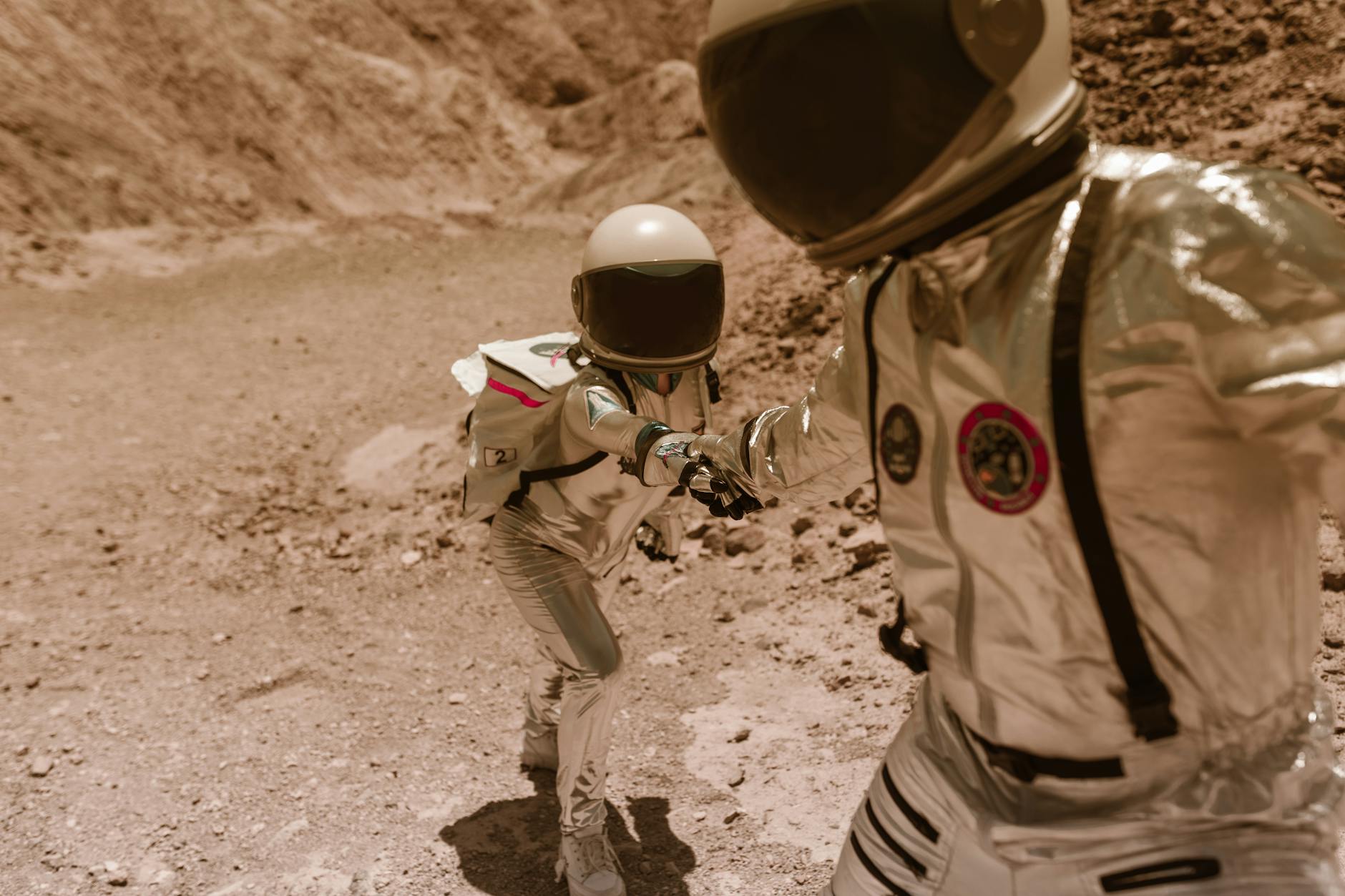
Student teams at universities worldwide now participate in Mars simulation competitions using commercial drones. These programs create a pipeline of engineers familiar with autonomous flight operations and planetary exploration challenges. The Massachusetts Institute of Technology and Stanford University run particularly notable programs that regularly feed talent into NASA and private space companies.
Commercial drone technology advances at a pace unmatched by traditional aerospace development cycles. Consumer drones receive new features, improved sensors, and enhanced processing power annually. Space agencies benefit from this rapid innovation cycle by continuously testing cutting-edge capabilities that eventually migrate to spacecraft designs.
The symbiotic relationship extends beyond testing. Space agency research influences commercial drone development, particularly in areas like extreme environment operation and autonomous navigation. Features developed for Mars missions often find applications in terrestrial drone operations, from agricultural monitoring to disaster response.
As space exploration enters a new era of international cooperation and private sector involvement, commercial drones will continue playing an expanded role in mission preparation. The lessons learned from thousands of hours of Earth-based testing with affordable consumer hardware are shaping humanity’s next steps on Mars, proving that sometimes the most profound discoveries begin with the simplest tools.
Frequently Asked Questions
Why do space agencies use commercial drones instead of specialized equipment?
Commercial drones cost thousands rather than millions, allowing extensive testing and rapid iteration before risking expensive spacecraft on Mars missions.
Where do space agencies conduct Mars mission drone testing?
Primary testing occurs in desert environments like the Mojave Desert and Iceland’s volcanic regions that closely resemble Martian surface conditions.