





Hurricane Florence churns toward the Carolina coast while meteorologists at NOAA’s Weather Prediction Center track its path using the same graphics processing units that power high-end gaming rigs. The RTX 4090 cards that gamers covet for rendering realistic explosions are now crunching atmospheric data to predict real-world storms with unprecedented accuracy.
Climate scientists have discovered that gaming GPUs excel at the parallel processing tasks essential for weather modeling. Unlike traditional CPU-based systems that handle calculations sequentially, graphics cards can simultaneously process thousands of computations – exactly what’s needed to simulate complex atmospheric interactions across millions of data points.
“We’re essentially running the atmosphere on hardware designed for virtual worlds,” explains Dr. Sarah Chen, computational meteorologist at the National Center for Atmospheric Research. “The same architecture that renders millions of pixels in a video game can model millions of atmospheric cells in real time.”

From Gaming to Climate Prediction
The transition from CPUs to GPUs represents a fundamental shift in how weather models operate. Traditional supercomputers relied on powerful processors handling one calculation at a time, limiting the resolution and speed of atmospheric simulations. Gaming graphics cards, however, contain thousands of smaller processing cores designed to handle parallel tasks simultaneously.
NVIDIA’s latest gaming cards feature up to 16,384 CUDA cores, each capable of independent calculations. When applied to weather modeling, these cores can simultaneously calculate temperature, pressure, humidity, and wind patterns across vast geographic regions. What previously required hours of processing time can now be completed in minutes.
The European Centre for Medium-Range Weather Forecasts has integrated GPU clusters into their operational systems, reducing forecast generation time by 75 percent. Their new system processes atmospheric data at 9-kilometer resolution globally, updating every six hours with forecasts extending two weeks ahead.
Research institutions are building GPU-based clusters using commercially available gaming cards. The University of Colorado’s atmospheric science department operates a 200-GPU cluster built primarily with RTX 4080 and RTX 4090 cards, delivering computational power equivalent to traditional supercomputers at a fraction of the cost.
The Mathematics of Weather
Weather prediction relies on solving complex mathematical equations known as the Navier-Stokes equations, which describe fluid motion in the atmosphere. These equations must be calculated across millions of grid points representing different atmospheric layers, altitudes, and geographic locations.
Each grid point requires simultaneous calculations for multiple variables: temperature, pressure, humidity, wind velocity in three dimensions, and their interactions with neighboring points. The computational demand grows exponentially with increased resolution and forecast length.
Graphics cards excel at this type of parallel mathematical processing because they were designed to handle similar challenges in 3D rendering. Calculating lighting, shadows, and textures for millions of pixels requires the same type of simultaneous mathematical operations needed for atmospheric modeling.
Modern weather models divide the atmosphere into layers extending from the surface to the stratosphere, with horizontal resolution ranging from 1 to 50 kilometers. Higher resolution requires more computational power but produces more accurate local forecasts. GPU-based systems enable meteorologists to run high-resolution models previously impossible with traditional computing resources.
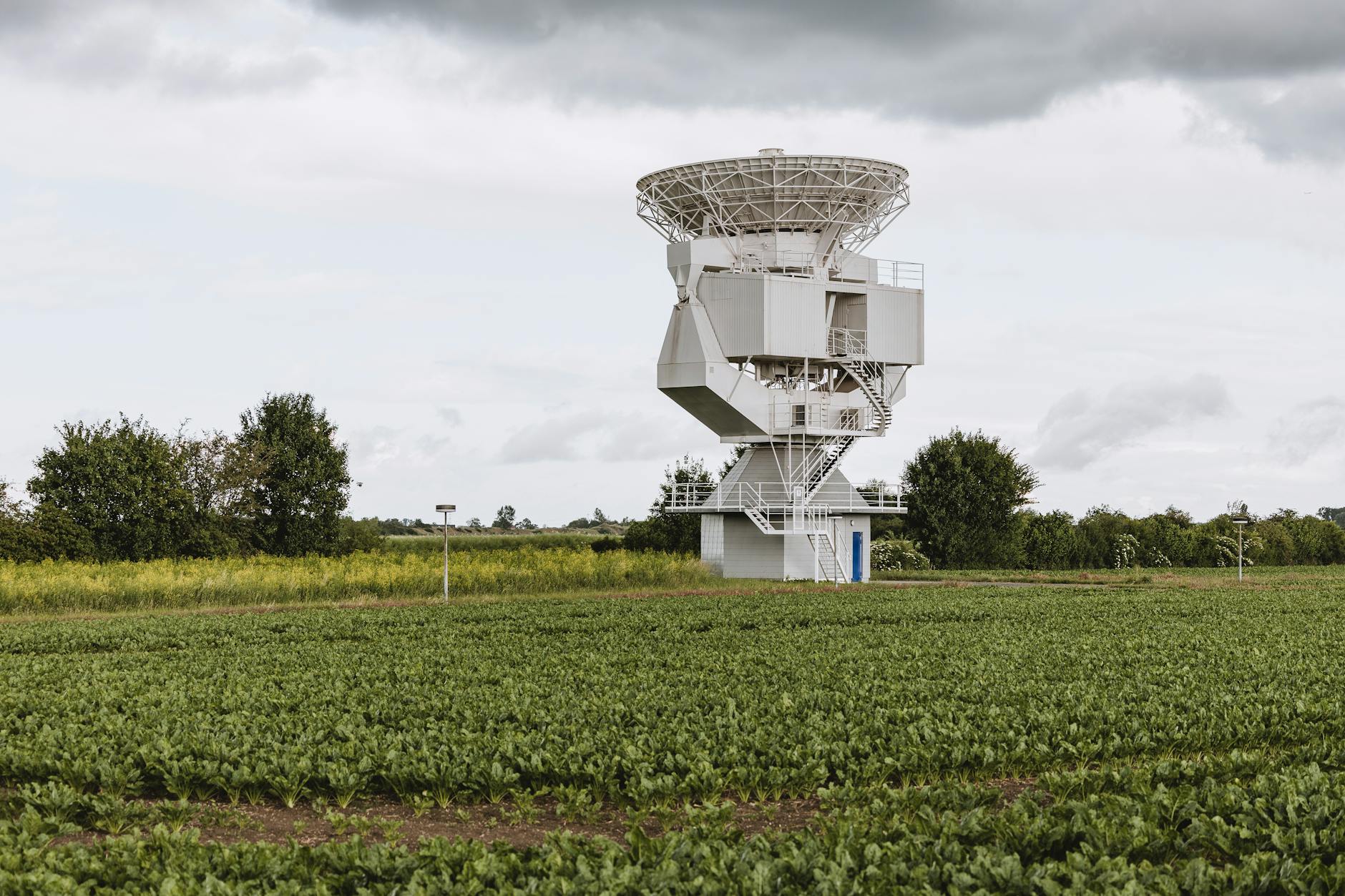
The numerical weather prediction process involves taking current atmospheric observations, using mathematical models to simulate how conditions will evolve, and producing forecasts for specific locations and times. This process must complete within strict time windows – morning forecasts must be ready before dawn, and severe weather warnings require rapid updates.
Real-World Applications and Results
The National Weather Service has integrated GPU-based processing into their operational forecast models, improving both speed and accuracy of predictions. Their High-Resolution Rapid Refresh model now updates hourly instead of every three hours, providing more timely warnings for severe weather events.
Hurricane track predictions have improved significantly with GPU-enhanced models. The 2023 Atlantic hurricane season saw average track forecast errors of 41 miles at 48 hours – the lowest on record. Enhanced computing power allows meteorologists to run multiple model scenarios, identifying potential forecast uncertainties and improving confidence levels.
Climate research benefits even more dramatically from GPU acceleration. Long-term climate simulations spanning decades or centuries require enormous computational resources. Researchers studying climate change impacts can now run century-long simulations in weeks rather than months, enabling more comprehensive analysis of different scenarios.
The Oak Ridge National Laboratory’s climate modeling program uses GPU clusters to study regional climate impacts at unprecedented detail. Their simulations model climate changes down to 1-kilometer resolution across entire continents, helping local governments plan infrastructure investments and adaptation strategies.
Similar to how deep sea research vessels are using AI for species classification, meteorological applications demonstrate how gaming technology finds new purposes in scientific research.
Economic and Environmental Benefits
GPU-based weather modeling delivers substantial economic advantages. Building equivalent computational power using traditional CPU-based supercomputers costs 3-5 times more than GPU clusters. Power consumption drops significantly as well – GPU systems consume 60 percent less electricity while delivering comparable or superior performance.
Improved weather forecasts generate billions in economic value through better agricultural planning, transportation efficiency, and disaster preparedness. More accurate hurricane predictions alone save millions in unnecessary evacuation costs while ensuring safety during actual threats.
Energy companies rely on enhanced wind and solar forecasts for grid management. Precise predictions of renewable energy output enable better integration with traditional power sources, reducing costs and improving reliability. GPU-enhanced models provide hourly updates for wind farms and solar installations nationwide.
The aviation industry benefits from more accurate turbulence forecasts and weather routing. Airlines report fuel savings of 2-3 percent through optimized flight paths based on high-resolution weather data. These improvements compound across thousands of daily flights, generating substantial environmental and economic benefits.

The democratization of high-performance computing through gaming hardware enables smaller research institutions and developing nations to participate in advanced weather research. Countries previously dependent on foreign weather services can now operate sophisticated forecast systems using commercially available technology.
The convergence of gaming and climate science represents more than technological efficiency – it demonstrates how consumer technology can address global challenges. As graphics cards continue advancing for gaming applications, weather prediction capabilities advance alongside them. The next generation of gaming GPUs promises even greater computational power, potentially enabling weather forecasts with resolution and accuracy unimaginable just years ago. Climate scientists worldwide continue adapting gaming innovations, transforming virtual processing power into real-world weather intelligence that protects lives and property across the globe.
Frequently Asked Questions
Why are gaming GPUs better than traditional computers for weather modeling?
Gaming GPUs can process thousands of calculations simultaneously, while traditional CPUs handle calculations one at a time, making GPUs much faster for complex weather simulations.
How much faster are GPU-based weather models compared to traditional systems?
GPU-based systems can reduce weather model processing time by up to 75 percent while consuming 60 percent less electricity than traditional supercomputers.