


The gaming world just witnessed something extraordinary: OLED monitors finally cracking the code that made CRT displays legendary among competitive gamers. After decades of LCD dominance sacrificing response times for better colors and viewing angles, OLED technology has achieved what seemed impossible – matching the legendary sub-millisecond response times that made bulky CRT monitors the gold standard for professional gaming.
Recent testing from DisplayLag and RTINGS confirms that flagship OLED gaming monitors now deliver response times as low as 0.03 milliseconds gray-to-gray, rivaling the best CRT displays from the early 2000s. This breakthrough represents more than just a technical milestone – it signals the end of the compromise between visual quality and competitive performance that has defined gaming displays for twenty years.

The CRT Legacy That OLED Had to Beat
CRT monitors dominated competitive gaming for good reason. Their phosphor-based technology delivered practically instantaneous pixel response, with gray-to-gray transitions occurring faster than modern measurement tools could accurately track. Professional Counter-Strike and Quake players swore by monitors like the Sony GDM-FW900 and ViewSonic P225f, which offered response times under 0.1 milliseconds alongside refresh rates up to 160Hz.
The transition to LCD technology in the mid-2000s brought larger screens, lower power consumption, and sharper images, but at a cost. Early LCD panels suffered from response times exceeding 25 milliseconds, creating ghosting and motion blur that competitive players found unacceptable. While LCD response times improved dramatically over the years, dropping to 1-5 milliseconds on premium gaming displays, they never quite matched the instantaneous response of CRT phosphors.
This performance gap kept CRT monitors alive in competitive gaming circles long after they disappeared from offices and homes. Major esports tournaments continued using CRT displays well into the 2010s, with some fighting game competitions still preferring them for their zero-latency performance. The holy grail for display manufacturers became clear: deliver CRT-level response times with modern panel technology.
OLED’s Technical Breakthrough Explained
OLED technology achieved this breakthrough through fundamental differences in how pixels generate light. Unlike LCD panels that require liquid crystals to twist and backlight to filter through multiple layers, OLED pixels emit light directly when voltage is applied. This eliminates the physical lag inherent in liquid crystal response, allowing pixels to change states almost instantaneously.
Current flagship OLED gaming monitors from LG, Samsung, and ASUS achieve measured response times between 0.03 and 0.1 milliseconds across different color transitions. The LG 27GR95QE-B, for example, demonstrates consistent sub-0.1ms response times while maintaining excellent color accuracy and contrast ratios impossible on CRT displays. These measurements represent genuine gray-to-gray transitions, not marketing specifications based on idealized testing conditions.
The manufacturing improvements enabling these response times stem from advances in OLED material composition and driving circuits. Modern OLED panels use more efficient organic compounds that respond faster to electrical changes, while improved pixel driving electronics minimize the delay between signal input and light output. Samsung’s QD-OLED technology adds quantum dot enhancement for better color volume while maintaining the ultra-fast response characteristics of pure OLED.
Real-World Gaming Performance Impact
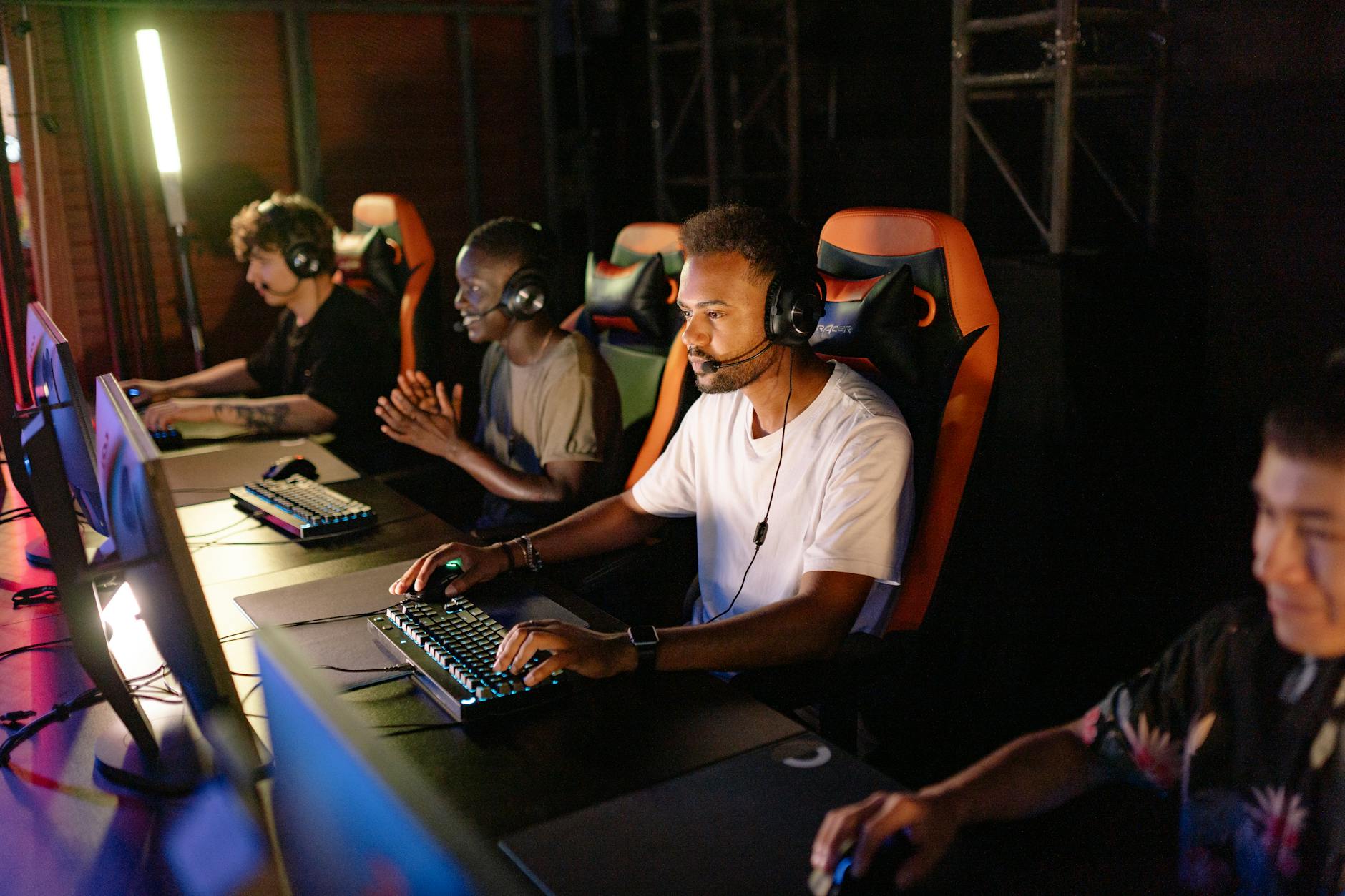
Professional gamers and esports organizations are taking notice of these improvements. TSM’s Valorant team recently switched to OLED monitors for practice sessions, citing the improved motion clarity and reduced input lag as competitive advantages. The difference becomes particularly noticeable in fast-paced shooters where tracking moving targets requires perfect motion reproduction.
Independent testing reveals measurable improvements in gaming performance with current OLED monitors. Motion blur reduction reaches levels previously only achievable on CRT displays, while maintaining the benefits of modern technology like variable refresh rates and HDR support. Games like Apex Legends and Overwatch 2 show dramatically clearer enemy tracking during rapid camera movements, giving competitive players the visual clarity they need for precise aiming.
The input lag benefits extend beyond response times to overall system latency. Combined with high refresh rates up to 240Hz and variable rate technologies, modern OLED monitors achieve total input lag measurements competitive with the best CRT setups. This addresses the complete signal chain from mouse movement to pixel response, not just panel switching speed.
As game streaming latency continues improving, the ultrafast response of OLED displays becomes even more critical for maintaining competitive performance across different gaming platforms and connection types.
The Display Revolution’s Next Phase
Major monitor manufacturers are rapidly expanding OLED gaming lineups to capitalize on this performance breakthrough. LG Display expects to triple OLED gaming monitor production capacity by 2025, while Samsung is developing larger QD-OLED panels specifically for gaming applications. Pricing remains higher than equivalent LCD monitors, but the premium continues shrinking as production scales increase.

The competitive gaming community is driving adoption faster than predicted. Major tournament organizers including ESL and BLAST are evaluating OLED displays for official competition use, potentially ending the CRT era entirely. The combination of CRT-matching response times with modern features like HDR, wide color gamuts, and 4K resolution creates compelling upgrade scenarios for both casual and professional gamers.
Future developments promise even better performance. Next-generation OLED materials under development could push response times below 0.01 milliseconds, while improved manufacturing techniques should bring costs closer to premium LCD pricing. The display industry has finally solved the response time puzzle that kept CRT monitors relevant decades past their technological prime.
The gaming monitor landscape has fundamentally shifted. OLED technology delivers the instantaneous response that made CRT displays legendary while adding modern capabilities impossible with older technology. For competitive gamers who have waited twenty years for displays that don’t compromise between speed and quality, that wait is finally over.
Frequently Asked Questions
How fast are current OLED gaming monitor response times?
Current OLED gaming monitors achieve response times between 0.03-0.1 milliseconds, matching or exceeding CRT display performance.
Why were CRT monitors preferred for competitive gaming?
CRT monitors offered sub-millisecond response times with zero motion blur, making them ideal for fast-paced competitive gaming despite their bulk and power consumption.
