




Machine Learning Transforms Jellyfish Monitoring
Every summer, beaches across the globe face the same challenge: massive jellyfish blooms that send swimmers fleeing and force lifeguards to close entire stretches of coastline. What once required marine biologists to manually count these gelatinous creatures through hours of underwater observation now happens in real-time through artificial intelligence systems that can identify, track, and predict jellyfish movements with unprecedented accuracy.
Marine biology labs from Australia’s Great Barrier Reef Marine Park Authority to the Mediterranean Sea Research Institute are deploying machine learning algorithms that analyze thousands of underwater images per hour, distinguishing between different jellyfish species and monitoring population densities across vast ocean areas. This technological shift represents one of the most significant advances in marine ecosystem monitoring since the introduction of satellite tracking.
Computer Vision Revolutionizes Species Identification
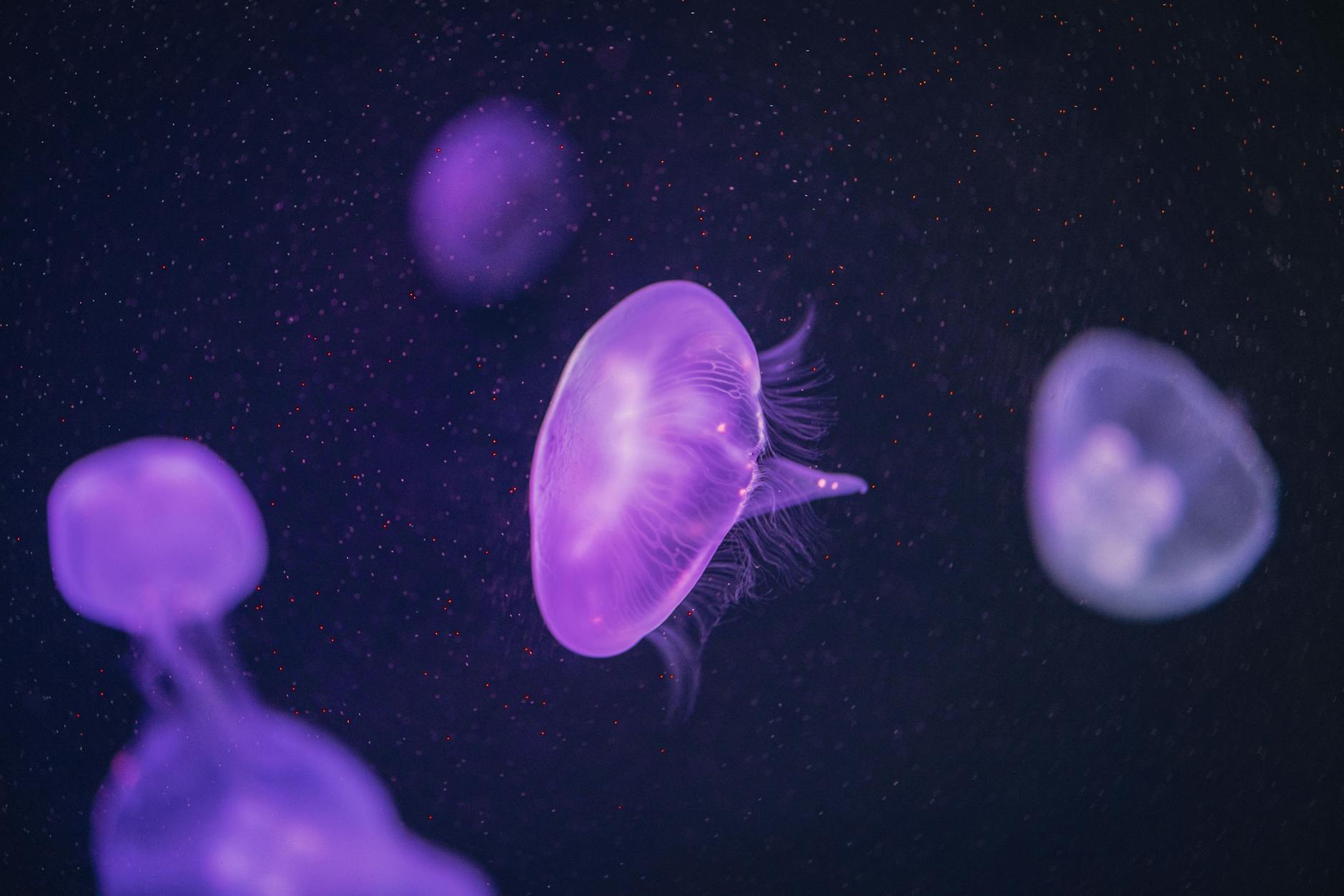
The Woods Hole Oceanographic Institution pioneered the use of convolutional neural networks for jellyfish identification in 2019, training their systems on over 200,000 images of various species. Their algorithm can now differentiate between the venomous box jellyfish and harmless moon jellies with 94% accuracy, even in murky water conditions where human observers would struggle.
Dr. Sarah Chen, who leads the marine AI initiative at the Monterey Bay Aquarium Research Institute, explains that traditional jellyfish surveys relied on scuba divers counting specimens during limited dive windows. “We could only survey small areas for short periods. Now our underwater cameras equipped with edge computing devices process images 24/7, giving us continuous population data across hundreds of square kilometers.”
The machine learning models use sophisticated image recognition techniques to identify key features: bell shape, tentacle configuration, coloration patterns, and movement characteristics. Advanced systems can even detect juvenile jellyfish that are nearly transparent and would be invisible to human observers. The European Marine Observation and Data Network has catalogued recognition patterns for 47 different jellyfish species found in Atlantic and Mediterranean waters.
These computer vision systems integrate with existing underwater drone technology used for marine research, creating comprehensive monitoring networks that operate autonomously for months at a time.
Real-Time Population Tracking and Bloom Prediction
Beyond simple identification, machine learning algorithms now predict jellyfish bloom patterns by analyzing environmental data including water temperature, salinity levels, plankton concentrations, and ocean current patterns. The Australian Institute of Marine Science combines jellyfish detection data with oceanographic sensors to forecast bloom events up to two weeks in advance.
These predictive models proved crucial during the 2023 Mediterranean jellyfish crisis, when AI systems detected unusual population concentrations near popular tourist beaches in Spain and Italy three days before the blooms reached coastal areas. Tourist authorities used this advance warning to implement protective measures and redirect swimmers to unaffected beaches.

The algorithms continuously learn from new data, improving their accuracy over time. Machine learning systems at the Marine Biological Laboratory process real-time feeds from 340 underwater monitoring stations, updating population models every six hours. This network detected a 340% increase in moon jellyfish populations along the Eastern Seaboard during the unusual warm water conditions of late 2023.
Researchers also use temporal analysis to identify long-term population cycles. Five years of continuous AI monitoring in the North Sea revealed that certain jellyfish species follow 18-month population cycles tied to specific temperature and nutrient patterns that were previously unknown to marine biologists.
Impact on Marine Ecosystem Management
The data collected through AI-powered jellyfish tracking provides insights into broader marine ecosystem health. Jellyfish serve as indicators of ocean conditions, with population changes often signaling shifts in food web dynamics, pollution levels, or climate change impacts.
Marine protected areas now use this technology to assess ecosystem balance. When AI systems at California’s Channel Islands National Marine Sanctuary detected a 60% decline in certain jellyfish species over six months, researchers investigated and discovered the correlation with recovering fish populations that compete for the same plankton food sources.
The technology also supports commercial fishing operations. Jellyfish blooms can damage fishing nets and contaminate catches, costing the industry millions annually. Norwegian fishing cooperatives receive AI-generated jellyfish density maps that help vessels avoid problematic areas, reducing equipment damage by an estimated 40%.
Tourism industries benefit significantly from accurate bloom predictions. The Greek National Tourism Organization uses machine learning forecasts to provide beach condition alerts through mobile apps, helping maintain visitor satisfaction during peak season when jellyfish activity typically increases.
Future Applications and Expanding Technology
Marine biology labs are expanding AI applications beyond basic population tracking. New research focuses on behavior analysis, with algorithms studying jellyfish movement patterns to understand migration routes and feeding behaviors. The Schmidt Ocean Institute recently deployed systems that track individual jellyfish across multiple days, revealing previously unknown territorial behaviors in certain species.
Integration with acoustic monitoring systems, similar to those used for fish population studies, allows researchers to correlate jellyfish presence with underwater sound patterns, creating multi-sensory ecosystem models.
As ocean temperatures continue rising and marine ecosystems face increasing pressure, machine learning systems provide marine biologists with the rapid-response monitoring capabilities necessary to understand and protect these complex underwater environments. The technology that once seemed like science fiction now serves as an essential tool for ocean conservation and public safety management.
Frequently Asked Questions
How accurate are AI systems at identifying jellyfish species?
Modern AI systems achieve 94% accuracy in distinguishing between different jellyfish species, even in challenging underwater conditions.
Can machine learning predict jellyfish blooms?
Yes, AI algorithms can forecast jellyfish bloom events up to two weeks in advance by analyzing environmental data and population patterns.