


The fashion industry’s leather problem has found an unlikely solution growing quietly in laboratories around the world. While traditional leather production requires millions of animal hides and generates massive environmental waste, scientists have discovered how to grow leather-like materials from mushroom roots, creating products that look, feel, and perform like animal leather without the ethical and environmental costs.
This breakthrough represents more than just another sustainable alternative. Major fashion brands including Stella McCartney, Adidas, and Hermès have already begun incorporating mushroom-based leather into their product lines, signaling a fundamental shift in how the industry approaches materials sourcing. The technology transforms mycelium – the root-like structure of mushrooms – into durable, flexible materials that can be processed into everything from handbags to car seats.
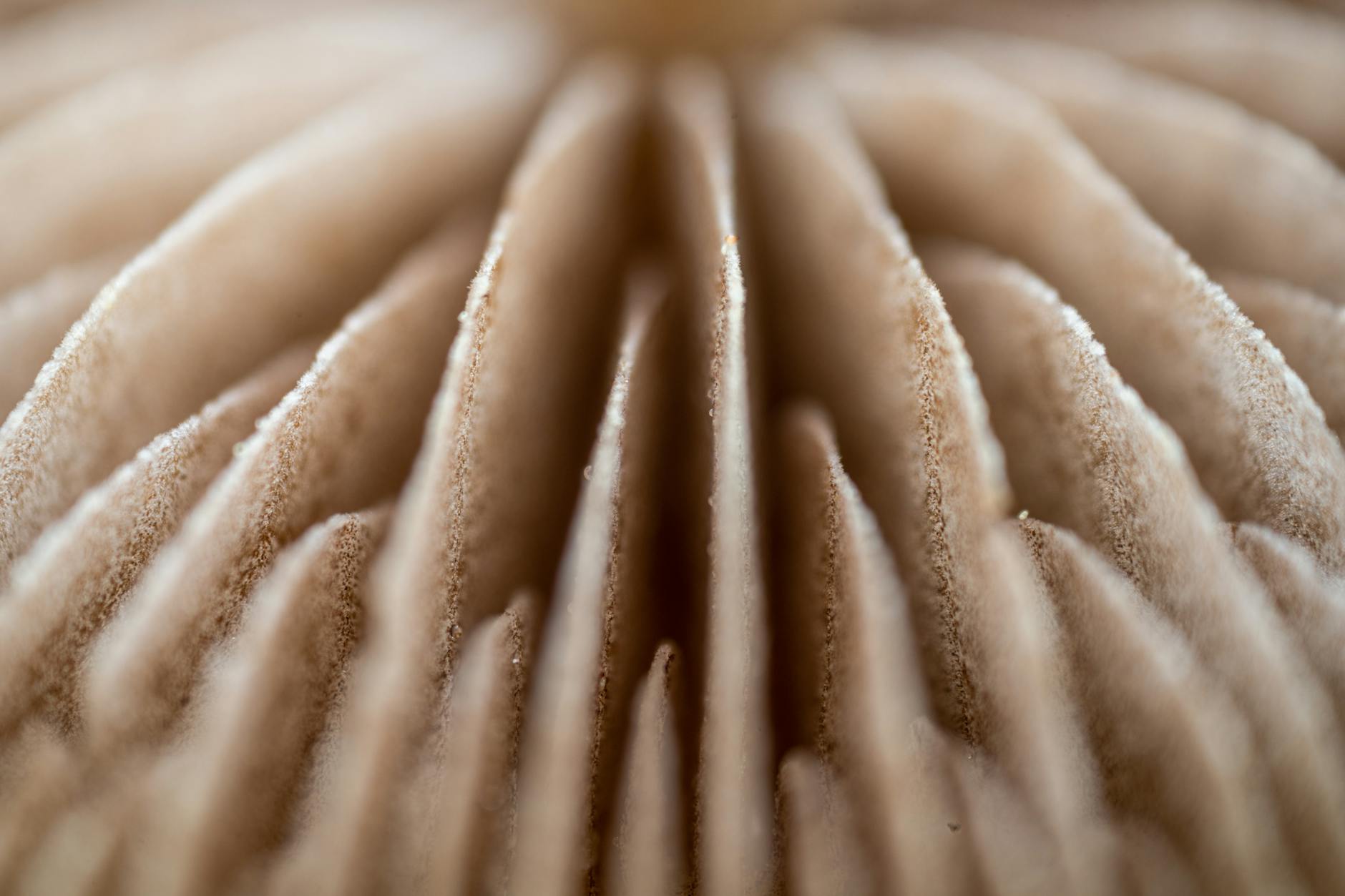
The Science Behind Mycelium Leather
Mycelium leather starts with the thread-like root systems that mushrooms use to absorb nutrients from their environment. These microscopic fibers naturally form dense, interconnected networks that create surprisingly strong and flexible materials when properly cultivated and processed.
Companies like Bolt Threads, MycoWorks, and Ecovative Design have developed proprietary methods for growing mycelium on agricultural waste substrates including corn stalks, sawdust, and hemp fibers. The process begins in sterile laboratory conditions where mushroom spores are introduced to nutrient-rich growing mediums. Over several weeks, the mycelium spreads throughout the substrate, creating a leather-like mat that can be harvested and processed.
The cultivation process requires precise control of temperature, humidity, and pH levels to ensure consistent material properties. Once harvested, the mycelium undergoes treatment processes similar to traditional leather tanning, but using plant-based chemicals instead of the heavy metals typically employed in animal hide processing.
MycoWorks, one of the leading companies in this space, has developed what they call “Fine Mycelium” – a material that reportedly matches the durability and aesthetic qualities of premium animal leather. Their process creates materials thick enough to be carved and tooled like traditional leather, opening possibilities for luxury applications that demand both beauty and performance.
Environmental Impact and Sustainability Benefits
Traditional leather production carries an enormous environmental footprint. Cattle ranching for leather contributes to deforestation, particularly in sensitive ecosystems like the Amazon rainforest. The tanning process relies heavily on chromium and other toxic chemicals that contaminate water supplies and pose health risks to workers in leather processing facilities.
Mycelium leather production generates dramatically lower environmental impacts across multiple metrics. The cultivation process requires minimal water compared to raising cattle, and the agricultural waste substrates used as growing mediums would otherwise decompose and release methane into the atmosphere. By utilizing these waste streams, mycelium leather production actually helps reduce greenhouse gas emissions from agricultural operations.
The controlled laboratory environment eliminates the need for pesticides, antibiotics, and hormones commonly used in livestock farming. Processing mycelium into finished leather products avoids the toxic chemicals used in traditional tanning, relying instead on plant-based treatments that don’t contaminate water systems or pose health risks to manufacturing workers.

Life cycle analyses conducted by several research institutions suggest mycelium leather production generates up to 85% fewer carbon emissions compared to conventional leather manufacturing. The materials also biodegrade naturally at the end of their useful life, unlike synthetic leather alternatives made from petroleum-based plastics that persist in landfills for decades.
Similar innovations in sustainable materials science are emerging across multiple industries, much like advances in perovskite solar cells that are revolutionizing renewable energy technology by offering more efficient alternatives to traditional silicon panels.
Commercial Applications and Market Adoption
Fashion brands have moved beyond experimental prototypes to commercial products featuring mycelium leather. Stella McCartney partnered with Bolt Threads to create handbags using their Mylo mycelium leather, while Adidas developed athletic footwear incorporating the sustainable material. These early adopters report customer responses that exceed expectations for both aesthetic appeal and durability.
The automotive industry represents another significant market opportunity for mycelium leather. BMW has tested mycelium materials for car interior applications, finding that the material meets stringent automotive standards for durability, flame resistance, and aging properties. Mercedes-Benz and other luxury automakers have announced plans to incorporate bio-based leather alternatives into upcoming vehicle models.
Furniture manufacturers are also exploring mycelium leather applications. The material’s ability to be produced in large sheets makes it suitable for upholstery applications, while its natural antimicrobial properties offer advantages for high-traffic commercial environments. Several high-end furniture brands have launched limited collections featuring mycelium leather upholstery.
Current production costs remain higher than conventional leather, but scaling manufacturing operations is expected to drive prices down significantly. Industry analysts project that mycelium leather could reach price parity with mid-range animal leather within the next five years as production volumes increase and manufacturing processes become more efficient.
Challenges and Future Development
Despite promising early results, mycelium leather faces several technical challenges that companies are actively working to address. Consistency in material properties remains a concern, as natural biological processes can introduce variations that affect the final product quality. Standardizing growing conditions and developing quality control measures requires significant ongoing research and development investment.
Scalability presents another hurdle. Current production facilities operate at relatively small scales compared to the massive global leather industry. Building manufacturing capacity capable of meeting fashion industry demand will require substantial capital investment and time to develop optimized production processes.
Consumer education also plays a crucial role in market adoption. Many consumers remain unfamiliar with mycelium leather and its properties, requiring brands to invest in marketing and education efforts to build awareness and acceptance of the new material.
Research continues into enhancing specific properties of mycelium leather to match or exceed animal leather performance in demanding applications. Scientists are exploring genetic modifications to mushroom species that could improve material strength, water resistance, and longevity. Some companies are experimenting with composite approaches that combine mycelium with other sustainable materials to achieve specific performance characteristics.
The convergence of biotechnology and materials science that enables mycelium leather represents part of a broader trend toward bio-based manufacturing solutions. As laboratory techniques become more sophisticated and production costs decrease, mycelium leather is positioned to capture significant market share from both traditional animal leather and petroleum-based synthetic alternatives.
Major fashion conglomerates including LVMH and Kering have announced sustainability commitments that specifically include transitioning to alternative leather materials, creating substantial market demand that will likely accelerate mycelium leather development and adoption across the industry.
Frequently Asked Questions
How is mycelium leather made from mushrooms?
Mycelium leather is grown from mushroom root systems cultivated on agricultural waste substrates in controlled laboratory conditions.
Is mycelium leather as durable as animal leather?
Current mycelium leather products demonstrate comparable durability to animal leather, with ongoing research improving strength and longevity.
