


Atmospheric Chemistry Revelations Transform Search Parameters
The James Webb Space Telescope has detected water vapor, carbon dioxide, and complex atmospheric dynamics on exoplanets previously considered barren. These findings are forcing astrobiologists to reconsider fundamental assumptions about habitability zones and planetary evolution.
Recent observations of WASP-96b revealed detailed atmospheric composition data that ground-based telescopes could never achieve. The telescope’s infrared capabilities penetrate planetary atmospheres with unprecedented precision, revealing molecular signatures that indicate active chemical processes.
Dr. Sara Seager from MIT notes that JWST’s spectroscopic analysis capabilities are “rewriting textbooks on planetary atmospheres.” The telescope can identify specific molecules in exoplanet atmospheres from distances of hundreds of light-years, providing direct evidence of atmospheric chemistry rather than educated guesses based on planetary size and distance from host stars.

This technological leap is reshaping research priorities across multiple institutions. NASA’s Goddard Space Flight Center has redirected funding toward atmospheric modeling programs that can interpret JWST’s complex data streams. The European Space Agency similarly adjusted their ExoMars mission parameters based on atmospheric composition insights from terrestrial planet analogues.
Biosignature Detection Methods Get Major Upgrade
Traditional biosignature research focused on detecting oxygen and methane as primary indicators of biological activity. JWST’s enhanced sensitivity allows researchers to identify more subtle chemical signatures that might indicate life processes.
The telescope recently detected sulfur compounds in the atmosphere of exoplanet K2-18b, suggesting possible biological processes that produce these molecules. On Earth, certain sulfur compounds are primarily produced by microbial life, making their detection on distant worlds significant for astrobiology research.
Research teams at the University of California, Berkeley are developing new analytical frameworks to interpret these complex chemical signatures. Their work builds on JWST data to create predictive models for identifying potentially habitable worlds among the thousands of known exoplanets.
The Hubble Space Telescope previously required multiple observations over months to gather basic atmospheric data. JWST accomplishes similar analysis in single observation sessions, allowing researchers to study many more planetary candidates. This efficiency gain enables systematic surveys of potentially habitable worlds rather than focusing on individual case studies.
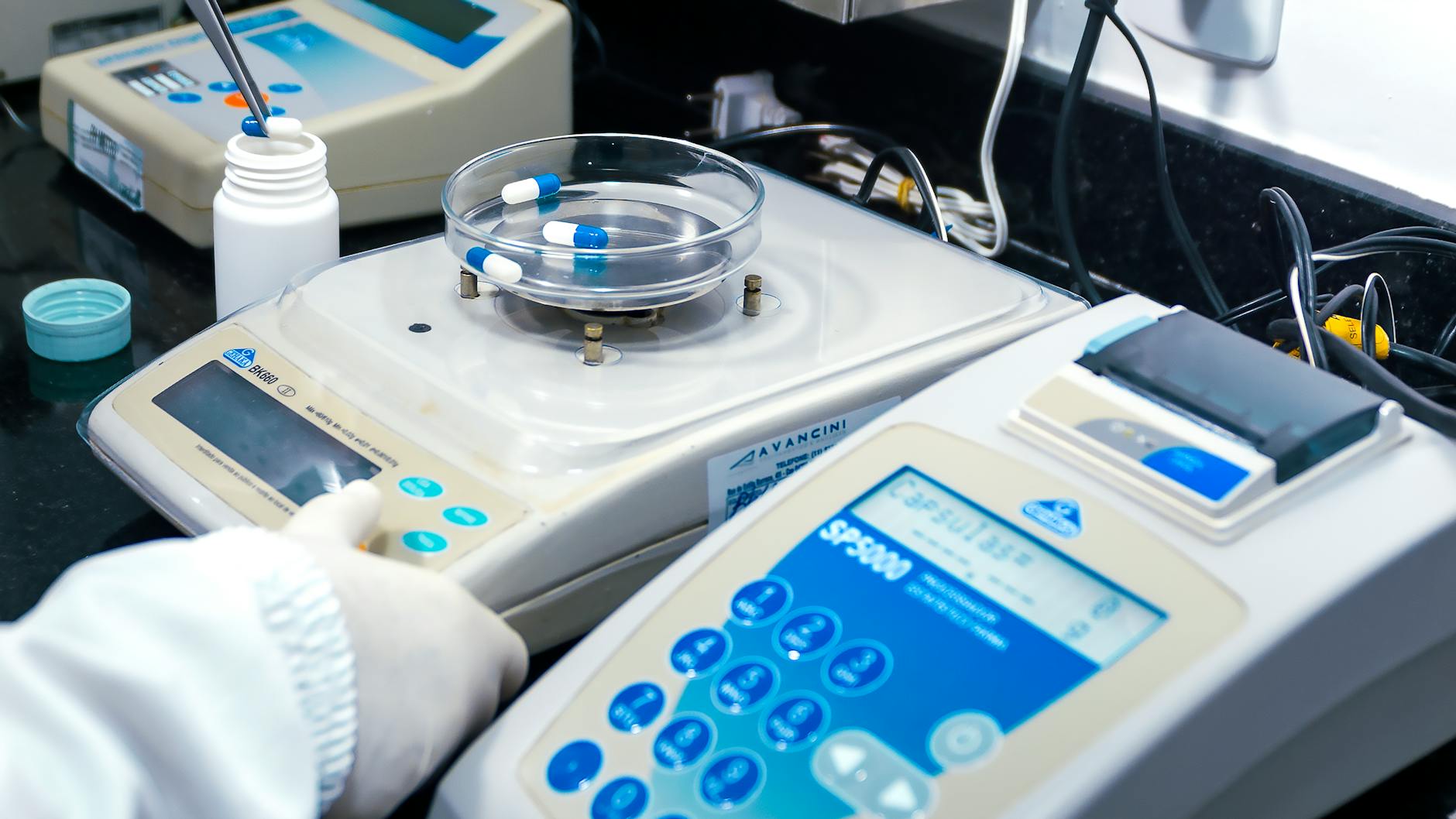
Laboratory experiments are now being redesigned to simulate the specific atmospheric conditions JWST observes on distant planets. The Harvard-Smithsonian Center for Astrophysics operates atmospheric simulation chambers that recreate the pressure, temperature, and chemical conditions detected by the telescope.
Rocky Planet Analysis Reveals Surprising Diversity
JWST’s observations of rocky exoplanets are revealing atmospheric diversity that challenges existing models of planetary formation and evolution. The telescope detected thick atmospheres on some planets previously thought to be airless, while others expected to retain atmospheres appear stripped bare.
The TRAPPIST-1 system, containing seven Earth-sized planets, provides a natural laboratory for studying rocky planet evolution. JWST observations show that planets within this system have dramatically different atmospheric compositions despite forming from the same disk of material around their host star.
These findings suggest that planetary habitability depends on complex interactions between stellar radiation, planetary composition, and atmospheric retention mechanisms. Research priorities are shifting toward understanding these dynamic processes rather than simply cataloging planets within traditional habitable zones.
Astrobiology research programs at Stanford University and the University of Washington are incorporating JWST data into comprehensive models of planetary evolution. Their work examines how stellar activity affects atmospheric retention over billions of years, crucial for understanding long-term habitability.
The telescope’s ability to study planetary atmospheres during transit events provides time-series data showing how atmospheric conditions change over planetary orbits. This temporal analysis reveals seasonal variations and atmospheric dynamics previously invisible to researchers.
International Research Collaboration Intensifies
JWST discoveries are driving unprecedented collaboration between space agencies, universities, and research institutions worldwide. The European Southern Observatory coordinates ground-based follow-up observations to complement JWST’s space-based measurements.

Similar to how CERN’s quantum research advances secure communications technology, JWST’s exoplanet discoveries require international coordination to maximize scientific impact. Data sharing protocols allow research teams across continents to analyze observations collaboratively.
The Japan Aerospace Exploration Agency announced plans to develop next-generation spectroscopic instruments based on JWST’s successful designs. These instruments will focus specifically on biosignature detection in rocky planet atmospheres, building on the foundation JWST established.
Chinese research institutions are contributing atmospheric modeling expertise to international collaborations studying JWST exoplanet data. Their computational resources help process the massive datasets the telescope generates, enabling faster analysis of potential biosignatures.
Research funding agencies worldwide are adjusting grant priorities to support JWST-enabled discoveries. The National Science Foundation increased funding for astrobiology research programs by focusing on projects that can utilize the telescope’s unique capabilities.
The discoveries emerging from JWST observations represent just the beginning of a new era in exoplanet research. As the telescope continues operating through the decade, each new observation adds pieces to the puzzle of planetary habitability and the potential for life beyond Earth. The telescope’s revolutionary capabilities are not just answering existing questions about exoplanets – they’re revealing entirely new questions that researchers are only beginning to formulate.
Frequently Asked Questions
What makes JWST better than previous telescopes for studying exoplanets?
JWST’s infrared capabilities and enhanced sensitivity allow detailed atmospheric analysis in single observations, compared to months of data collection required by previous telescopes.
How are JWST discoveries changing astrobiology research?
The telescope’s detailed atmospheric data is forcing researchers to reconsider habitability assumptions and develop new models for detecting potential biosignatures on distant worlds.
